Musings, Potshots

Balakote: A Post-Mortem for countless Jaish-e-Mohamed cadres


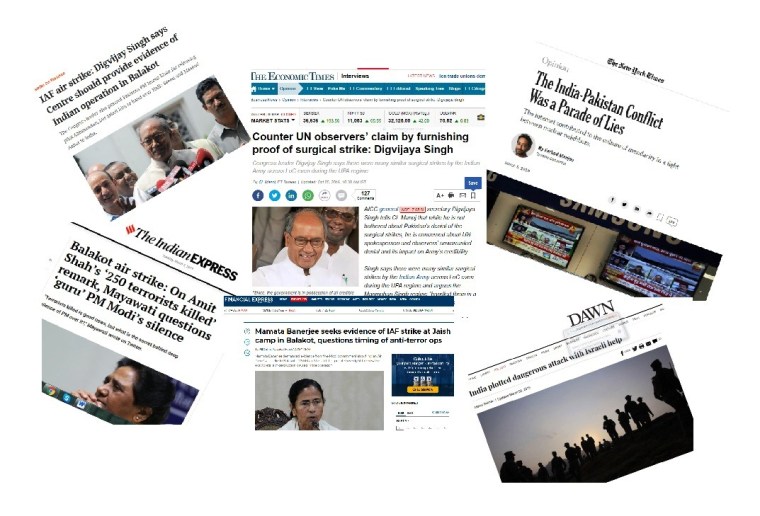
Balakote Post MortemAs Indian political leaders, and even some Indian journalists, question the veracity and impact of the Indian Air Force strikes on Jaish e Mohammed facilities at Balakote on February 26th, their questions resemble those of the smug lawyer who was questioning a pathologist in the Coroner’s Court:

Lawyer: Doctor, before you signed the death certificate, did you check the patient for pulse?

Doctor: No.

Lawyer: Did you check for blood pressure?

Doctor: No.

Lawyer: Did you check for breathing? For heartbeat?

Doctor: No.

Lawyer: (triumphantly)  So, doctor, do you admit it is possible that the patient was alive when you signed his death certificate?

Doctor: Well…let me put it this way. The patient’s brain was sitting in a jar on my desk when I signed his death certificate. But I guess it’s possible he was alive; indeed, he might even be practicing law somewhere.

I, dear reader, have no doubts at all about the IAF strikes on Balakote and their impact on the Jaish cadres sleeping in the targeted buildings. The several thousand kilos of penta-erythritol tetranitrate carried by those Spice missiles and thrust through the roofs of the buildings would have wreaked horrific destruction when they went off within – ripping apart metal, concrete, brick, wood, human flesh and bone.

I entirely empathized with the IAF Chief when he curtly told the media: “Our job is not to count bodies.”

Unlike the doubters as well as the gleeful war-mongers in their TV studios and editorial rooms, I do NOT want proof on how many JEM personnel were killed, or how many brooms and hoses were needed to clean up their remains.

Only the post-mortem of the deceased JEM cadres remains to be concluded.

The Coroner’s Court is noisy.

Two groups among those present—one Indian, the other Pakistani—are particularly strident. But strangely, both groups are screaming more or less the same things.

The Modi-led government is lying.”

“The Indian government is lying.”

“There was no Jaish camp in Balakote.”

“Where is the proof that there was a Jaish camp at Balakote?”

“Where’s the proof that the IAF hit their targets or killed any Jaish men?”

“The IAF hit nothing…only a few trees.”

How can Indians and Pakistanis be united in screaming against the Indian government?

Well…

The Pakistani group – comprising the Pak establishment, ISI, army and media – hates India in general and the Modi-led Indian government in particular. This is sad, yet understandable.

The Pakistani group’s hatred has been stoked by the IAF strikes on Balakote, which have gone down well among the Indian public in an election year.

The Indian group – comprising Congress, CPM, TMC and other Opposition parties, as well as large sections of Indian media –  hates the Modi-led government. This is sad, yet understandable.

The Indian group’s hatred too has been stoked by the IAF strikes on Balakote, which have gone down well among the Indian public in an election year.

Easy to understand…no?

I pay no attention to politicians because I do not trust politicians.  By definition, all politicians lie. Nikita Khrushchev put it succinctly:

Politicians are the same all over. They promise to build a bridge even where there is no river.

With a few noble exceptions, I pay no attention to journalists because I do not trust journalists. Try this out: take any event or issue, look at five different newspapers or TV news channels or websites, and you’ll get at least 19 different versions of ‘fact’, varying continuously and seamlessly with every passing hour. Breaking news is no longer distinguishable from breaking wind. As Thomas Jefferson put it:

The advertisements are the most truthful part of a newspaper.

Who, then, O long-suffering reader, can we trust to show us, tell us, the truth?

I don’t know about you…but I’ll stick with the Indian armed forces.

Be at peace, O deceased Jaish men.  Unlike your Pakistani army handlers,  I at least acknowledge that you once lived.

Jai hind.


Potshots, Verse perverse

Understanding the Budget: An A,B,C Primer for Rahul Gandhi-ji

Whether the ‘Interim Budget’ presented by acting Finance Minister Piyush Goyal was actually interim or not is immaterial – as immaterial as the benefits you and I will receive from the Budget.

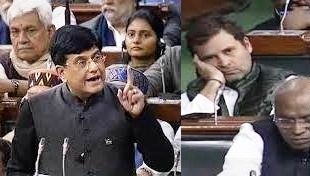
Far more tangible was the utter bewilderment on the face of Congress President Rahul Gandhi during Goyal’s speech. Clearly, the poor man was quite flummoxed by the barrage of economic spiel, financial terms and affiliated data Goyal dished out, tera-flop by tera-sop.

Long on speech, longer in face

Following the budget speech, we staggered up to the terrace and espied a piece of paper gently floating in from the general direction of Parliament Street. Grabbing it and smoothing it out, we discovered it to be a page torn from a standard-issue Lok Sabha jotting-pad. The page was filled with writing, starting with a four-line piece of doggerel!

We transcribe below, O faithful reader, the lines from this solitary page. We can only guess at the identity of the author – perhaps a cynical Congress or CPI(M) Member whose heart is yet in the Right, or even Left, place?

[QUOTE]

Rahul-ji’s angst and anguish doth grow and grow

With Goyal’s every buzz-word, every cackle and crow

Rahul-ji’s frown deepens; his face grows longer – little wonder

‘Tis clear he can’t follow a word, however hard he doth ponder

With general elections a couple of months away, and with strong indications that our Mahagathbandhan might well form the next government with Rahul-ji as prime minister, surely we must all try and help Rahul-ji understand some common terms used in connection with the budget?

Here is a small glossary to get Rahul-ji started:

 Appropriation Bill: This is a bill of receipt, or challan, given to you by team from Income Tax Department, Enforcement Directorate or CBI after they raid your home and/or office and appropriate assets disproportionate to your known sources of income. [Always remember: when raided,  insist on Appropriation Bill].

Balance of payments: Denotes the difference in total value between various payments into and out of India over a certain period of time on account of kickbacks on defense equipment, hawala transactions and so on, through legally disapproved channels such as Channel Island companies.

 Fiscal policy: Derives from the vision of  Congress fore-fathers, fore-mothers and fore-others, of an India where our youth – young and old alike – are strong and muscular, that is, fiscally fit. Fiscal fitness is especially important during election campaigning. Today BJP makes tall promises to set up infrastructure for fiscal fitness such as gyms, sports stadiums and so on. In practice, however, these promises are never kept and the money allocated disappears without trace in ghotalas and goshalas, leading to a weak fiscal condition in people known as fiscal deficit.

Gross Domestic Product (GDP): Although it might sound gross or unpleasant, GDP is a vital measure of the overall garbage output from the entire domestic or household sector in India.  As household prosperity increases, so too does household consumption of junk food and junk goods, and therefore of household garbage output. This is famous Garbage In = Garbage Out principle. Hence, high GDP growth is good because it means India’s economy is growing.

Inflation: Describes the tendency of the BJP government to make exaggerated claims about everything, including the size of Narendra Modi’s chest.  Affiliated terms are deflation and recession, manifest in shrinking chests of BJP members upon losing in successive state assembly elections.

Plan and Non-Plan Expenditure: Plan expenditure is what the government tells the public it wants to spend. Non-plan expenditure is what government has to spend, but doesn’t tell the public it has to spend, in order to spend what it tells the public it wants to spend as plan expenditure. [For more simple explanation, please consult Mani Shankar Aiyar-ji and/or Shashi Tharoor-ji]

 Public account: Refers to the public admission made by a high-level politician or government servant who is accused of swindling public money, during a court hearing that is open to public. When the hearing takes place in Supreme Court or Delhi High Court, the public admission is known as capital account.

[UNQUOTE…END OF PAGE]

P.S.:  We offer a reward of Rs 10,000 in non-demonetized notes to anybody who can trace the remaining pages of this invaluable document.


Potshots

Congress’ Amorous Campaign, 2019

Let us rejoice! For the Congress promises to bring us a brighter, more loving future in 2019:

When Rahul Gandhi conquers the Sangh Parivar

With his boundless love, and assumes power

A leading newspaper columnist has revealed that the Congress Party is planning to make Rahul Gandhi’s hugging of Prime Minister Modi a center piece of its 2019 general elections campaign.[click here to read report, or go to https://indianexpress.com/article/opinion/columns/inside-track-hug-vs-slug-5281082/]

Rahul's boundless love
Rahul’s boundless love

The idea of a Congress Love Campaign fills us with delight.

Almost as much delight as Prime Minister Modi must have felt in the Lok Sabha that fateful July day, when, after Rahul delivered a passionate speech that blended incoherence, irrelevance and insolence in the proportion of 40:30:30, the youthful 49-year old Congress president suddenly and unexpectedly announced in ringing tones his boundless love for all humanity, including even Modi; declared his resolve to convert all Indians, including even the BJP members, to become loving Congress acolytes; galloped across the hall, stood over the bewildered Modi and commanded him to rise and receive his (Rahul’s) hug; and when Modi failed to oblige, bent down and clasped the PM, unasked, in a strong and presumably loving embrace.

We witnessed it live, gentle reader.

We choked; we nearly wept; so overcome were we with mirth.

We respectfully urge Rahul and the Congress to build on Rahul’s infantile performance, and to focus their electoral love campaign on mobilizing the young voters of tomorrow—the younger, the better!

With this principle in mind, we offer the following visual as our humble contribution to the Congress creative team’s ’ efforts. A small baby step that, we hope, will enable Rahul to assume charge of India and spread his message of Universal Love and Hugs.

Congress campaign ad 2019
Possible poster for Congress’ 2019 campaign: Catch ’em young! 

Hail jhappi-pappi!

Jai hind.


General ravings, Potshots

Art of Reliving

Resolve Mandir/Masjid Mess – learn from secular mosquitoes

It’s that happy time yet again! When, inspired by a cerebellum that is as overflowing with originality and creativity as Rahul Gandhi’s is, I reach into the dusty shelves of decade-old works and re-inflict them upon my hapless and rapidly dwindling readership.

The reason for committing this latest atrocity on thee, O dear and innocent reader, is to defend the initiative taken by Sri Sri Ravishankar—the Indian spiritual leader, head of ‘Art of Living Foundation’, popular among Hindus, Muslims and other communities for his teachings, cosmetics and other rejuvenating products—to engage with Muslim community leaders in an effort to settle the gangrenous, 30-year-old  Ram Mandir/Babri Masjid dispute out of court. Sri Sri’s initiative is being met with violent opposition from many rabid, self-styled leaders of Hindu and Muslim communities.

An important disclaimer: I am no ‘follower’ of Sri Sri. In fact, I have severely criticized him in speech and in writing (and still do) for hosting his ‘World Culture Festival’ on the Yamuna floodplains in March 2016; an event that led to the de-vegetation and flattening of a vast area on the floodplains. The repercussions of that ecological assault are still being directly and painfully felt by the undersigned and other residents of East Delhi in the shape of year-round  attacks by assorted species of mosquitoes (all of them entirely secular in their choice of prey);  because with the denudation of bushes and scrub on the floodplains, these bloodsuckers have lost their traditional  breeding and brooding grounds on the said floodplains.

But I still believe Sri Sri and his associates, Hindu and Muslim, are doing the right thing, indeed a noble thing, by trying to solve this hideous mess over Mandir vs. Masjid; a mess that’s led to mass murder in the past – and threatens mass murder in times to come.

If Sri Sri succeeds in his mission, I am even willing to forgive him for the mosquito bites he has caused me, and countless others of every faith.

And so, in good faith, I present here an article I wrote for the edit page of Indian Express nearly 15 years ago, when the Kanchi Shankaracharya launched an identical ‘reconciliation’ initiative in 2003—and was met with the same violent opposition and ridicule by so-called leaders of Muslim and Hindu communities. In fact, the man was even charged with murder in 2004, arrested, jailed and tried…only to be absolved of all charges and released in 2016!

You’ve taken on formidable forces, Sri Sri! Victory be thine: Jai Vijaye Bhava!

[article follows]

Listen to the Kanchi seer

R P Subramanian: Jun 14, 2003

http://archive.indianexpress.com/oldStory/25716/

 It is heartening that the Muslims of Faizabad-Ayodhya see the Kanchi Shankaracharya’s initiative to resolve the Ayodhya tangle as a ‘‘good beginning’’ (‘Local Muslim leaders find some hope…’, IE, June 11). Ironically, the sincerity of the Kanchi seer’s efforts is proven conclusively by the heated opposition he has drawn from the lunatic fringes — both Hindu and Muslim! Organisations such as the Vishwa Hindu Parishad, Bajrang Dal, All India Babri Masjid Action Committee and Sunni Wakf Board will never solve the Ayodhya problem because they are the problem. While the common citizenry of both faiths only want peace and harmony, these bodies comprise bigoted, self-serving individuals who not only claim to represent their religions, but have obtained enormous fame and political power precisely by keeping the Ayodhya issue simmering. Any solution to the dispute would threaten their very existence. Quite naturally, then, they have resisted, and will resist, any attempted solution. Remember how the Kanchi seer’s initiatives for dialogue were rubbished by both the VHP and BMAC in 2002?

Let us face it: the Ayodhya issue will not be resolved by the much-bandied ‘‘court decision’’ (assuming it ever comes). It will be solved only by mutual understanding between the Hindu and Muslim communities at large. After all, any court decision will be interpreted in only one of two ways: as favouring the building of a temple, or of a mosque. If the verdict favours a mosque, the VHP et al. will shriek that Hindus have been ‘‘betrayed’’. On the other hand, Muslim bodies such as BMAC will become redundant at a stroke; their very raison d’etre would be gone! So the VHP and similar self-styled ‘‘Hindu’’ bodies will incite violence across the country; the members of BMAC and similar ‘‘Muslim’’ bodies, threatened by redundancy, will find fresh reasons to project themselves as ‘‘defenders of the faith’’;  the outcome will be chaos and bloodshed.

And what if the verdict favours a temple? Alas, these dreadful organizations would merely switch roles. The BMAC would shriek that the Muslims have been betrayed, the VHP would assume the mantle of ‘‘defenders of Hinduism’’, and  chaos and violence would follow.

The only way to unravel the Ayodhya tangle is to shun any political, executive or judicial involvement — precisely what is being advocated by the Kanchi seer and by the Muslims of Faizabad-Ayodhya. Let us not be misled by the rabble-rousers, Hindu and Muslim, who have no religious or intellectual authority whatsoever to represent the laity; who number no more than a few thousand; yet who have held a nation of one billion hostage to their narrow-minded agendas for decades. Let us leave it to learned men and women of both faiths to sit together and agree on a simple way by which the country can finally discard the communal baggage of the past.


Musings, Potshots

Presidential Broad-Caste and our Caste-Ironed Media

The ugly, cruel media brouhaha over who will be the next ‘Dalit’ President of India, Ram Nath Kovind or  Meira Kumar, brings to mind two anecdotes:

  • When Dr. Zakir Husain became the President of India, a journalist asked him – Was it not the victory of secularism in the country that a Muslim had become the President? Dr. Zakir Husain replied – “I would have been very happy if you had not mentioned my religion. It is because of the beauty of our Constitution where every citizen is equal that I have become the president.”
  • A famous pianist accidentally bruised his finger severely minutes before a major performance. Despite his heavily bandaged finger and pain, he insisted on playing as scheduled. The Master of Ceremonies was aghast. Having failed to dissuade the pianist from performing, he sought permission to inform the audience about the accident, and that the maestro would perform nevertheless. “You shall do nothing of the sort!” cried the maestro. “Why, tonight I might perform better than I ever have or ever shall in my life…yet, remembering your words, the people in the hall will shake their heads and look at one another and say: ‘The maestro played quite well tonightalas, if only he hadn’t injured his finger, how much better his performance might have been!’ No, no, I shall play to minds unclouded by irrelevant sympathies for my finger!” And so he did. The performance was brilliant.

Consider, gentle reader, the case of Ram Nath Kovind, nominated for the post of President of India by the ruling NDA government. The entire Indian media sees Kovind as nothing more than a ‘Dalit’; indeed, barring a precious few noble exceptions, our journalists see Kovind’s nomination as being based on this single loathsome argument: by nominating Kovind the Dalit, the BJP-led NDA is assuring itself of Dalit votes in the 2019 Lok Sabha polls.

Worse, the media couches its twisted presentations in the enervating, patronizing gobbledygook of political correctness. One example is an editorial which brightly suggests that there is ‘rich symbolism’ in the prospect of a Dalit president [click here to read]. Such an outlook views every Indian through the narrow, warped lenses of caste, religion, ethnicity, language—lenses that are selected and discarded as per convenience and context to make this or that argument. It is this very vision that fractures Indians into thousands of mutually hostile social groupings; that continues to prevent the Dalit from ever shedding his/her ‘Dalit identity’ (our intellectuals have even coined a term for this: ‘dalitness’); that indeed drove Rohith Vemula, the student from University of Hyderabad,  to take his own life in despair.

When K R Narayanan, and later  APJ Abdul Kalam, assumed the office of President, great swathes of us ‘educated, urbane’ Indians did not, or could not, recognize or celebrate the fact that these were self-made men of humble origins, who were supremely qualified for the highest office because of their humaneness, moral fibre, formidable intellects and scholarly achievements. All we saw was that a ‘Dalit’ and ‘a Muslim’  had become President! And thus we diminished them. …as we now diminish Kovind.

As we now diminish Meira Kumar, nominated by the Opposition against Kovind.

Thus do we diminish, degrade ourselves.

Can you spot the Muslim Hindu Brahmin ST SC OBC
Can you spot the Muslim? the Hindu? the Brahmin? the Dalit?

This narrow-minded vision of humanity has cursed India and its populace for thousands of years; like a long-lived radioactive poison, it has spread across the country, seeped into our educational policies, our political and governance structures, our minds, our deeds. The only cure is incredibly simple: to awaken to, and accept, the simple, scientific truth that beneath our many-hued skins and assumed symbols of religious, caste, and other forms of social exclusivity, we are all simply and equally human. It is a truth that frightens the hell out of the bigots among us, the casteists, communalists, racists. But it brings incredible joy…for we truly then see the One in All, and All in One.

Nothing religious about that, no?


Beastly encounters, Musings, Potshots

A coffee bean’s trauma (or, Nightmare on Dung Street)

Feverish insights into the goodness of dung and the oneness of all living things

Warning

A week or so ago,  a great Indian thinker—the Hon. Mahesh Chandra Sharma, recently retired judge of Rajasthan High Court—provided new and wondrous insights into the Divine Attributes of the Indian Cow [click here to read full report].  We were enthralled, delighted, by his revelations; we were eager to believe.

Alas, many highly ill-reputed intellectuals in India and abroad greeted Hon. Sharma’s revelations with amusement, skepticism, and even scorn. Our belief was shattered.

Was Sharma-jee wrong?

Is the bovine no divine but a mere mortal?

These and other weighty  questions kept us tossing restlessly in bed night after night, till we resolved to seek wise counsel from one of the world’s leaders in bovine research: Dr Pashupalan Moosa, Senior Director at  the Indian Cow Research Institute (ICRI), Gurgaon and  Head of the Product Innovations, Design & Development Labs (PIDDL), located in the sprawling 1400-acre campus of ICRI.

We met Dr Moosa in his spotlessly clean lab-cum-office. He was a curly-haired, bespectacled gentleman of about sixty-five, wearing a white lab coat and the placid expression of the Indian water buffalo. On the wall behind his desk was a fetching portrait of Kamadhenu, the Celestial Cow. Dr Moosa bade us sit and poured out two cups of black coffee from a large percolator. We accepted a cup gratefully and took a sip. The coffee was excellent: just the right warmth, strong yet not bitter, heady in fragrance, with a kind of wild, mossy, moist flavour that evoked the freshness of rain forests.

“We have ten minutes,” Dr Moosa murmured.

“Sir,” we began hesitantly, “the Hon. Mahesh Chandra Sharma has provoked considerable mirth and wrath with his claims that the cow is a divine creature. As a leading expert in bovine sciences, what do you make of his statements?”

“Of course Sharma is right: the cow is divine,” Dr Moosa murmured. “Just as you are divine! As indeed is a tapeworm, an ant, a chicken, a tick, a bacterium, a cuttlefish!” He leaned forward, warming to his theme.  “Listen: all living creatures on Earth are made of the same genetic stuff. Whether we are bacteria or Bactrian camels, conger eels or Congressmen, capuchin monkeys or capitalists, Komodo dragons or communists, giraffes or jihadists, all of us share the same DNA and RNA at the cellular level. We are all, at the core, truly One—whether we like the idea or not. All living things have spawned and evolved in the same great river of the Genetic Code, which some people call God by various names and others simply call names. So why should we exclude the poor bovine from this all-embracing divine realm?”

He was being a tad evasive, of course; but we were so awestruck by the potency of his words and his coffee that we let it pass. “All right, sir…but what about Sharma-jee’s other claims? For instance, he declares that a cow inhales as well as exhales oxygen! What kind of respiration is that, sir? It flies in the face of science!”

“Not at all,” said our colleague gently. “Haven’t you heard of mouth-to-mouth resuscitation?  It works because you can actually exhale part of the oxygen you inhale. So…it’s not only the cow that can inhale and exhale oxygen: we all can!”

“But…Hon. Sharma also quotes some obscure research by some untraceable Russian scientist named Shirovich to claim that a cow’s bellows can kill germs in the vicinity! Surely that’s absurd enough to make a buffalo laugh?”

Our learned colleague chuckled. “Well, first the point about a cow’s bellows killing germs. Here too Sharma is factually correct. It’s the media that’s got the story wrong! The media has misinterpreted the word ‘bellows’ to mean the sound a cow makes with its mouth, and ended up looking at the wrong end of the cow…um…pipe. You see, a cow does not bellow; it moos. By ‘bellows’, Sharma is referring to the simple, age-old mechanical device used for squeezing out gas from a bag at high pressure. Now, it is an established fact that a cow…er… squeezes out more than 60 litres of methane and other gases daily from its stomach bag – a direct result of its grassy, high-protein diet.  Think of it: 60 litres! Forget germs, no living creature can possibly survive such saturation bombardment by the highly aromatic emissions from a cow—not even an elephant that’s lost its sense of smell!” Dr Moosa paused and looked at us keenly. “If you like, I can take you across to PIDDL’s integrated cattle shed complex; you’ll vividly appreciate the point when we’re half-a-kilometre away.”

“There’s no need for that, sir!” we assured him hastily. “But then, what about this Shirovich, the Russian bovine scientist that Hon. Sharma referred to? He’s untraceable! We’ve hunted for Shirovich and his purported work on the Net, in libraries…but to no avail.”

Dr Moosa shook his head sadly. “I have no doubts at all that this Shirovich exists or existed, and that his work is authentic. My guess is that Shirovich must have quietly succumbed to an excess intake of bovine emissions while undertaking some long-term experiment, doubtless in some remote bovine lab in Siberia or the Ural Mountains where his demise went unnoticed. That’s why he is untraceable, poor fellow: a great loss to the scientific world.”  He sighed and refilled our cups with steaming coffee.

We fought off the feeling of unreality that was slowly enveloping us. “There’s also been a lot of unkind comment in social media over other things Hon. Sharma said. Like, he says the cow is a clinic! And he goes on and on about the healing powers of cow urine and cow dung…”

“Of course he’s right!” broke in Dr Moosa.  “You must try and ignore the cackling of the hoi-polloi!”  He paused, reached into a desk drawer, took out a small dark-brown package wrapped in plastic and handed it to us.

“Behold!” he cried. “This is the latest product from the PIDDL stables…er…cattle pens. It’s pure, fresh cow dung, painstakingly collected by my team from cows that have grazed only in the ISO 9001:2008-certified organic pastures of PIDDL. We’ve enriched the dung with vitamins and minerals, added subtle flavours, and given it a catchy brand-name: ‘PIDDL Dung’!” His face was flushed with pride and enthusiasm. “PIDDL-Dung is now being marketed as a breakfast-food supplement in 114 countries, including USA, EU, UAE, Japan and Australia. It’s one of the greatest success stories of the Make in India initiative!”Grazing dream
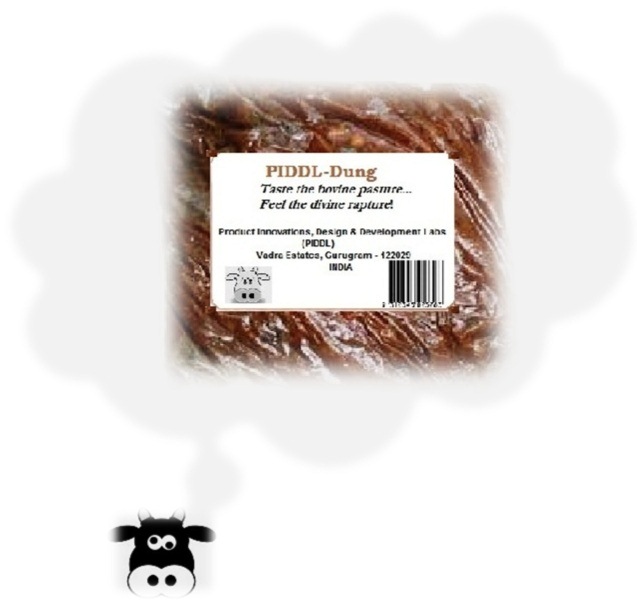
“That’s amazing,” we whispered, holding the PIDDL-Dung package gingerly. “But why is it only being exported? Why aren’t you marketing it in India?”

Dr Moosa smiled tolerantly. “Our marketing team knows what it is doing. Indians will never embrace any traditional Indian product—until the West first embraces it. Now that other countries, particularly the West, have started consuming PIDDL-Dung by the ton, Indians will soon follow in droves!”

We tried to speak but only succeeded in making soft mooing noises.  On the wall, Kamadhenu twitched her tail and gave us an inquiring look.

“PIDDL-Dung comes in six flavours at present,” Dr Moosa went on. “This one’s chocolate-almond; please accept it as a gift!”

“Thanks, but sorry, sir,” we mumbled, placing the package down on the desk. “It’s just a little hard to stomach the idea of eating cow dung…”

Arre bhai!” he cried. “If you can eat sheep’s brains and goat’s gonads, if you can gobble up fish eggs and frog’s legs, if you can wolf down globs of pounded flesh stuffed into bags stitched from pig’s intestines in the name of sausages, why’s it so hard to savour some clean, tasty cow dung? Hahn-jee?”

His logic was irrefutable, yet hard to swallow. “But …but these are animal feces!” we protested feebly.

Dr Moosa relapsed into moody silence.  But after a moment he looked up and smiled. “Did you like the coffee? Would you like some more?”

“So kind of you, sir… the coffee’s really superb. But we’ve taken up enough of your time, thank you.” We rose, nodded at Kamadhenu who nodded back, and shook our host’s hand.  He walked with us to the door.

“This is Kopi Luwak coffee, you know,” he murmured as we reached the door.  “It’s from Indonesia. It’s the most expensive coffee in the world. A kilo costs anything from 1200 dollars to 3000 dollars, that’s two lakh rupees…”

We were stunned. “What’s in that coffee, gold?” we asked.

He chuckled. “No, it’s not gold.  Although curiously, gold is the word used by local Indonesians to describe the animal feces from which they get the coffee beans…”

We clutched the door for support. “What!”

“Yes…you see, the coffee beans are picked out from the feces of the Indonesian palm civet cat. This lovely animal likes eating coffee cherries. The cherries are digested, but the beans stay intact as they pass through the animal’s stomach and intestine. In the process they absorb certain unique flavours, and so when they emerge…”

Dr Moosa broke off and started to laugh at our horrified expression. It was an extraordinary laugh: not quite human, rather a series of shrill, persistent monotonic beeps that grew louder and louder. It was almost like the sound of a morning alarm…

Mercifully, it was.

Musings, Potshots

Desi Valentine

It is the eve of Valentine’s Day! An appropriate time, then, to dust off and (ignoring thy shrieks of despair and protest) inflict upon thee a learned essay I wrote 14 years ago on this ancient Indian festival of love [actually, a ‘middle’ in Times of India on February 6th 2002; still viewable, in garbled form, here]

Lovers can celebrate Valentine’s Day with a whole new fervour!

Recent studies by Indologists reveal that the roots of this festival, celebrated on February 14 each year, can be traced back to ancient India: specifically, to the Harappa civilization. It appears that the name itself is derived from belan din (rolling pin day), an occasion when the young Harappan woman put down her rolling pin and embraced her flower-bearing lover with flour-coated hands. Over the centuries, this name inevitably underwent change. at some stage the word daine (right) was added on, to emphasize the fact that the sensible woman held on to her belan with her right hand just so that her man did not get any funny ideas about decamping with some shameless hussy from Sumeria or Samarkand. The resulting belan daine din in due course became Valentine’s Day in the twisted tongue of the British colonialists.

However, as with all things Indian, this central theme gave rise to an amazing variety of subsidiary myths elsewhere in our country. For instance, in Maharashtra there are reasons to believe that the festival gets its name from the ubiquitous and much-loved bhelpuri. Wonderful indeed are the legends that tell of how, on this day many millennia ago, an ardent young Maratha lad gazed into his beloved’s eyes as she stirred the bhelpuri pot and whispered: bhel ani tumi which of course means “Bhel… and thou!” It was the ultimate expression of love.

The cow belt has a different version. In ancient times this day was an occasion for young men and women to jointly feed the community’s bullocks or bel with mounds of that green and tasteless vegetable known as tinda. How romantic bel tinda day must have been to those young wooers of Uttar Pradesh and Bihar as they stood amidst the snorting beasts and watched them slurp down their victuals by the pail-full.

Bengal puts a totally different spin to the story. Tradition here has it that a beautiful young lass named Bela had to choose her mate on this day from three equally suitable suitors of the Dey clan. The tale ends in typically tragic fashion; unable to choose, Bela becomes a wandering songstress renowned for that immortal ditty to love, Bela teeni dey….

Most relevant to our troubled times, however, is the Tamil Nadu version. On this day, amorous Tamilian teenagers of yore greeted others with sweets and joyous cries of “Vellum tayen!” meaning, ”Give us some sugar!”. Naturally, ignorant Englishmen corrupted ‘tayen‘ to ‘tine’ and the whole thing became Valentine. But wait a minute:  a tine, as we know, is one of those pointed things a fork has; and a fork is but a trident by another name. And who do we associate most commonly with  tridents nowadays? The Bajrang Dal, of course!

Here, then, lies the key to ensuring happy and peaceful Valentine’s Day in the coming years. The Bajrang Dal, recognizing the festival’s intimate connections with the ancient traditions of India, will hereafter join in the Valentine’s Day celebrations, greeting one and all with succulent sweets, serenades and secular hymns…

bajrang-dal-celebrates-belan-daine-din
Bajtrang Dal celebrate Valentine’s Day, 2017

Belan Daine Din ke Shubhkamnaye!