General ravings, Musings, Potshots

The redness of Sindhoor – 2

Believe it or not, O Dear Gentle Reader, I started to write this a few days after the Indian Director General of Military Operations (DGMO) granted  the Pakistan’s DGMO’s pleas for an end to hostilities; and that,  after the Indian military administered a much-deserved thrashing to the  Pakistan military during Operation Sindhoor, May 7–10, 2025. 

But I’ve kept adding to this rant, and subtracting from it, and amending it, all these weeks and months because so much has been happening so fast since then: between India and Pakistan, and between  India and the USA, and Pakistan and USA, and India and China, and Israel and Iran, and Pakistan and Iran, and Pakistan and Bangladesh, and India and Afghanistan, and Pakistan and Afghanistan, and Russia and Ukraine and the EU and the USA, and the USA and Israel and Iran and China and Myanmar and Russia and Bangladesh and …well…the USA and the rest of the world. And it’s been hard staying up to date and keeping tabs on all of these developments and events and discerning patterns in them.

Because they’re all closely, weirdly related, and not at all in a nice and friendly way for India and you and I and the Resident Lizard who, as usual, even now reads over my shoulder and chuckles derisively as I type this.  

That’s why, in the interim, I only posted a kind of foreword to this long rant titled “The redness of Sindhoor-1” in August : a kind of grim remembrance of the Indian civilian establishment’s collective cowardice following the Pakistan-sponsored terrorist attack on Mumbai in November 2008.

But now, driven by impatience and exhausted by Cacoethes Scribendi,  I scribble the last few words and post this rant before Dilli’s toxic air drives the last ergs of energy from body and last vestiges of rationality from mind.

First, in the warm and generous spirit of Deepavali, may I offer a (mercifully) short poem to Pakistan’s Field Marshal Asim Munir (though I suspect Munir-bhai may not like to be reminded of things like bright lights, flames and explosions after Operation Sindhoor):

I post this just over four months after Pakistan, led by the devout  Gen. Munir and the beatific Pak Prime Minister Shabaz Sharief, snatched  victory from India in Operation Sindhoor in May 2025; and barely a month after Pakistan snatched the Asia Cricket Cup from India in September 2025.

Let me hasten to explain, before I’m pilloried by my Adored Readers for being high on smooth whiskey and/or good ganja, or arrested by the Indian government or assassinated by Indian vigilantes for expressing ‘anti-Bharatiya sentiments’.

Consider Operation Sindhoor.

Sure, during Operation Sindhoor, India flattened terrorist training camps in Pakistan-Occupied Kashmir as well as the headquarters of Jaish e Mohammed and Lashkar e Tayyeba in Pakistan itself, killing a hundred or more terrorists of different degrees of murderousness and kookiness in the process.

Sure, the Indian Air Force (IAF) destroyed 12, possibly 13, Pakistani air force planes, including F16 and JF17 fighters and at least one AWACS and ELINT aircraft each—some of them shot out of the air, others incinerated in their hangars or on the tarmac in airbases across and deep within Pakistan by drones and rockets and long-range missiles. Sure, India attacked and destroyed assorted high-value infrastructure in at least 11 strategic (N-strike) Pak airbases including the runways, hangars with aircraft in them, air defence systems, and strategic command-and-control infrastructure, killing a hundred or more Pak military personnel in the process. Sure, evidence of all the havoc caused by the Indian military has been presented in public, not just by the Indian military but by defense/strategic analysts worldwide, and the evidence is still available to you and me and Pakistan and the world in public domain, in satellite imagery and on the Net and in print.

Sure, there is also clear evidence that in the course of its attack on Pakistan’s Nur Khan and Sargodha strategic air bases, the IAF severely damaged an undeclared (i.e., secret) underground N-reactor complex in  the nearby Kirana Hills along with an unknown number of dis-assembled N- warheads. Judging by reports, these N-warheads were plutonium-239  (Pu-239) devices. [This conclusion is based on a simple fact:  unlike uranium-235 warheads which are very stable once shaped and pre-assembled, plutonium-239 warheads constantly decay to non-fissile isotopes like Pu-240, Pu-241 etc. which ‘contaminate’ the Pu-239 over time, till the warheads become like soggy Deepavali crackers that go ‘Phuuussss’ instead of creating a hole the size of Delhi.  And so, Pu-239 warheads require a dedicated N-reactor to refine the plutonium in them back to fissile-grade, in a  complex never-ending cycle. ]

Most interestingly, there is also damning evidence that some or all the N-warheads in the underground N-facility in Kirana Hills—and indeed the entire Nur Khan air base— was under the direct command and control, if not full OWNERSHIP, of the US Air Force (USAF) and had been so for at least 15 years, perhaps ever since the so-called ‘War Against Terror’ launched by the USA under George Bush Jr.  And that the USA set up and controlled Nur Khan to keep a baleful N-watch on China, just as the USA had set up the Bagram base in Afghanistan to keep a strategic eye on China.

In effect, then, India not only delivered several painful kicks to Pakistan’s collective military butt during Operation Sindhoor; India also knowingly or unknowingly (I suspect the former) attacked and destroyed or severely damaged a secret and fully operational USA-run  N- strike air base located in Nur Khan, along with USA-built F-16 fighters and a secret, USA-owned ,underground N-complex including  N-warheads and  N-reactor in Kirana Hills.

But Pakistan declared – and continues to declare – that it defeated India in the battles of May 2025.

Pakistan’s Field Marshal described the inevitability of Pakistan’s victory over India as follows while addressing a Pakistani community event in Florida, USA in August 2025:

“India is like a shining Mercedes coming on a highway like Ferrari, but we (Pakistan) are a dump truck…If the truck hits the car, who is going to be the loser?”

In destroying the USA-owned N-assets in Nur Khan and Kirana Hills in Pakistan, India has put not only Pakistan but Trump and the USA in a hell of a hot spot—militarily, diplomatically and politically.

There’s the money angle, of course…so important to Trump and his cronies. The USA set up the Nur Khan air base alone for over 550 million dollars—and that was only the capital cost.  The annual recurring costs would have been many times that figure. The Kirana Hills N-infrastructure would have cost billions of dollars.

That’s a lot of money, even for a do-numberi  builder-don like Donald Trump.

 Losing all that money to Indian strikes must be terribly painful to Trump and his Deep State cronies, especially when all those beautiful American assets have been reduced to piles of radioactive rubble underground.   

In fact, Trump et al. must be feeling the same pain as Iran did, when Trump’s USAF reduced Iran’s N-complexes in Fordow, Isfahan and Natanz to piles of radioactive rubble underground…

But it’s much more serious than that for Trump and the Americans.

On the one hand, the USA simply cannot ever admit that it owned and ran these N-weapon facilities in Kirana Hills or owned and managed Nur Khan N-strike airbase in Pakistan. Because, to do so would be to admit that the USA had installed N-weapons and N-delivery assets targeted at China  in a secret US base located right next to China—in Pakistan, ostensibly, a  ‘friendly’ neighbouring country of China!

And THAT would put the USA exactly where the Soviet Union had put itself when it started to establish Soviet N-missile bases very close to the USA, in Cuba, in 1962…bringing all humankind close to thermonuclear incineration before better sense prevailed thanks to John F Kennedy and Nikita Khrushchev…but that’s another story.

On the other hand, the USA cannot hide the evidence of its perfidious ownership and management of the Nur Khan air base or the Kirana Hills N-weapon facilities for long—because not only is all the evidence out there for the world to see, but N-radiation has an inexorable and horrible way of revealing itself in time…however deeply it might be buried

Most important, Pakistan is not going to let the USA escape responsibility and leave Pakistan to bear  the fallout—nuclear and figuratively—of the devastated underground N-facility and the remnants of N-warheads lying inside there, and its ruined air bases and related military losses. 

Yep folks, Pakistan has really got Trump and the USA by their short and curly N-hairs this time. For a while, at least.

And that’s why Trump toadies up to and ingratiates himself with Munir-bhai and Shabbaz-bhai of Pakistan  by the passing day, even as his rage against India intensifies by the passing second and by the midnight tweet.

The USA will never admit any of this:  they dare not, for their own reasons.

Pakistan will never admit any of this; they dare not either, for their own reasons.

A related question arises: why did Pak PM Shehbaz Sharif promote Pak military chief Asim Munir to Field Marshal and felicitate him for ‘defeating India ’ in  Operation Sindhoor?

Well…let’s empathize with Shabbaz Sharief on this one. Sharief had no choice but to promote Munir to Field Marshal; because to demote or court-martial Munir— as any other country in the world with a microgram of self-respect would have done after Munir led his military to such a humiliating defeat— would be to admit that Pakistan’s military had suffered defeat at the hands of India’s military.

And that admission simply cannot be made by any Pakistani PM.

As Pakistan’s brief but bloody history shows, such an admission, however truthful it might be, would lead to a speedy and unpleasant end for that Pak PM.

Whatever little poor Shabbaz Sharief understands about anything else in life, he certainly remembers what happened to erstwhile Pak PMs Zulfikar Bhutto and to Benazir Bhutto, even nearly to his own brother Nawaz Sharief….

Pakistan believes its supremacy over India, making ‘peace’ with India an absurd proposition. This belief is non-negotiable; it is, in Pakistan’s collective psyche, so deeply ingrained that it is the God-given Truth.

It is taught in Pakistani schools upwards. It is taught in religious seminaries. It is naturally, understandably, echoed in the Pakistani media, in the civilian and military streets of Pakistan.

That is why Pakistan declares that it won the conflict against India in May 2025; as it has won every earlier conflict with India since 1947.  

For Pakistan, eternal victory against India is the Holy Hallowed Truth.  However Holey and Hollow that ‘truth’ is.

This is Pakistan’s strength.  In a weird and wonderful way (though Munir might not like the analogy), Pakistan is in fact practising a fundamental tenet of Hindu philosophy: a tenet taught by Krishna to Arjuna in the Bhagavad Gita:

You cannot ever be defeated if you believe strongly enough that you haven’t ever been defeated and can’t ever be defeated.

“All that’s very well,” the Patient and Revered Reader might justifiably ask: “But why should this false, hole-ridden Pakistani version of the truth be published as the Truth in the Supreme Court of the World, also popularly known as Western English Media which includes BBC, New York Times, The Washington Post, The Guardian, and affiliated rags?”

The answer to this is best illustrated by the old joke about God and Devil.

And lastly (phew, at last), consider the Asia Cricket Cup, September 2025.

Sure, India and Pakistan played each other thrice during the tournament. Sure, India defeated Pakistan all three times, including in the Final.

But guess where the Asia Cup is?

The Asia Cup is NOT with the Indian cricket team. The Cup is not even in India.

The Asia Cricket Cup  is in fact in Pakistan, in the grubby hands of one Mohsin Naqvi who is the Chief of the Pakistani Cricket Board, and also works as Pakistan’s Interior Minister when he is not otherwise preoccupied stealing cups, awards and affiliated symbols of victory that belong to other nations.

How come Pakistan and this Mohsin Naqvi fellow snatched the Asia Cup from India after losing the Asia Cup tournament to India?

Well…now we know…

Because Pakistan can never be defeated by India. Pakistan always must win… one way or the other.

Jai Hind!

Ancient writings, Musings, Remembering, Verse perverse

The redness of Sindhoor – 1

O Gentle and Patient Reader,  I take the liberty of posting an article—a lament of sorts—written by my dear and departed friend Ghatotkacha in late 2008, soon after the terrible attack by Pakistani-trained terrorists on Mumbai on 26th November 2008. Ghatotkacha was my guide, my teacher, so close to my heart, in a very real sense my alter ego. I empathized with and endorsed every word in his article then. as I do now.

I post this the day after India’s Independence Day, 2025; a time when India and Pakistan still obsess over Operation Sindhoor, the name given to India’s short but devastatingly effective military campaign against Pakistan-based terrorist and military  infrastructure in  May 2025.

I post this article even though it is filled with anger and bitterness. I post this for the simple reason that I, like my fellow Indians, am conditioned to ignore and forget my own history…and worse, to eagerly seize upon and adopt, on continuous basis, others’ versions of my own history without a care.

I believe we must be brave enough to remember and come to terms with all that we ever really were, and really did, and really experienced: whether right or wrong, good or bad, sublime or horrific.

Because only then can we learn, only then can we act. With neither self-loathing nor hatred. But with Equanimity.

Only then can we heal ourselves, and move on

[That’s what another old and eternal friend Krishna counselled…]

[© Ghatotkacha Hidimbi Bhimasena (late): December, 2008]

First there was the rage.

Fury poured out on to the streets of Mumbai post 26th November 2008, fiery words spewed from the mouths of countless anchors on a hundred TV channels. There was much talk of retaliation, of revenge, of this latest atrocity by Pakistan-sponsored and Pakistan-supported and Pakistan-sheltered and Pakistan-trained terrorists being the last straw.

India has been restrained all these decades…but enough is enough!” These words about summed up the collective feeling of the Indian people after 200 innocent men, women and children were slaughtered by 10 murderers from Pakistan. Murderers helped overtly and covertly by the Pakistani military, the Pakistani establishment.

The evidence of Pakistan’s complicity was clear.

The world witnessed the massacre of innocents, on live TV.

The world awaited India’s response…as the Indian people did.

Two weeks passed, during which for the first time in memory the Indian political establishment actually appeared to have achieved the unimaginable – namely, to unite and speak as one in national interest.

“We are with the government in combating this evil force that has attacked our nation, that threatens the future of India,” said Opposition leader and BJP member (late) L K Advani on the floor of Parliament.

The Congress-led UPA leadership, in a symbolic move, sent the derelict Home Minister Shivraj Patil home and appointed the inflationary and inflated-ego Finance Minister P Chidambaram in his place.

In a rare and refreshing contrast to the Congress’ customary rodent-like squeak-speakers, External Affairs Minister Pranab Mukherjee fumed and fulminated against Pakistan and its deceitful references to the attackers as ‘non-state actors’, at one point memorably asking: “Do these non-state actors come from heaven?”

Equally remarkable was the fact that during these two weeks the Indian media collectively stayed with the Pakistan-sponsored terrorist attack story – that too sans the usual faffing in politically correct journo-speak, which requires that any atrocity by any kooks who claim to be ‘Muslim’ can only be reported as such when it can be ‘balanced out’ by reportage on a similar atrocity—real or imaginary— committed by kooks claiming to be ‘Hindu’. [This is, of course, the famous Balancing of the Kookery Equation Principle formulated by British sociologists in the 1850s, refined by the Congress and Communist Party of India (Marxist) post-Independence, and taught as a foundational course by mainstream Indian media houses to trainee reporters and journalists.]

Curiously, the English-language Indian media (seriously! That’s what they call themselves, and we call them) named the atrocity ‘26/11’—because ‘26/11’ resonates so well with the USA’s ‘9/11’—and so this name has stuck, even though it blithely ignores the fact that for the Americans, ‘9/11’ actually stands for September 11th (and not 9th November); by that logic we Indians should have called this Mumbai attack ‘11/26’. 

But then, what’s in a name, no?

At least for a change, there were no cut-and-paste editorials in the newspapers and magazines on how India must exercise ‘restraint’, no pious and ponderous platitudes on why India must follow the process of ‘dialogue’ and ‘negotiation’ with Pakistan rather than that of ‘confrontation’…

For the first time in history we were spared the logorrhea of human rights activists campaigning for the well-being of Ajmal Kasab, the sole Pakistani terrorist captured alive; spared, too, the hysterical outpourings of assorted pamphleteers drawing parallels between Mumbai 26/11 and Gujarat 2002 and Mumbai 1992/93.

By the time December 12th 2008 dawned, one actually dared wonder: had we, in India’s Civilian Street, finally discovered those rare qualities, Courage and Resolve?

Would the Indian political leadership, along with the bureaucrats and policy wonks and diplomats and strategic eggheads have the guts and the gumption to unshackle and unleash the calibrated might of our defense forces to strike and eliminate the sources of terrorist infection in our neighbour Pakistan’s ailing body? To strike not to destroy Pakistan, but rather to strengthen the Pakistani people in their silent, six-decade-old war against the Pakistani religious fanatics who rule them with fear; the monsters in clerical and military uniforms who have created schools of pain in the name of God, schools in which they have brutalized innocent young Pakistani boys and transformed them into the twisted, hate-filled murderers who call themselves Al Qaeda, Lashkar e Tayyeba, Harkat ul Jihad Islami, Jaish Mohammed?

We hoped so. The signs were good.

Alas, it was a futile hope.

In the two weeks since December 12th, 2008, the great show of bravado put up by our politicos and the media has all come unstuck faster than the dhoti of a certain senior Congress leader with a penchant for flashing.

As of 26th December, 2008 – exactly a month after the attack on Mumbai – India’s measures to avenge the Mumbai atrocity and cleanse Pakistan of terrorists comprise the following key elements:

  • Our nominal and notional PM, Manmohan Singh, has repeatedly appealed to the US, Britain, Australia, and any other country that might listen (and there haven’t been too many) to urge Pakistan not to send terrorists to India.
  • The PM and the Minister of External Affairs have repeatedly appealed to the United Nations to tell Pakistan not to send terrorists to India.
  • The PM and the Minister of External Affairs (as well as assorted Ministers of other Infernal Affairs) have repeatedly expressed disappointment that the international community is not telling Pakistan not to send terrorists to India.
  • The de facto PM Sonia Gandhi has repeatedly declared that India will give a ‘befitting reply’ to terrorists who think they can divide India on communal lines. (She is, apparently, even now drafting out the befitting reply on a standard-issue Congress party greeting card, which will doubtless be sent duly by Registered Post (with Acknowledgement Due) to Pakistan’s notional President Asif Zardari with copies for information and necessary action to Hafiz Muhammad Sayed of Lashkar e Tayyeba and Masood Azar of Jaish Mohammed..
  • The PM and the new Home Minster have announced the formulation of a new anti-terrorist law that will also include, in its ambit, heinous offences like smoking ganja and abusing politicians (might as well turn myself in).
  • The Hon’ble Union Minister A R Antulay has declared that the entire Mumbai atrocity was just a pre-planned strategy by Hindu fanatics to conceal the assassination of certain Mumbai police officers who were inquiring into bomb attacks targeting Muslims in Malegaon, Maharashtra by their brethren Hindu fanatics.
  •  The MEA has denied Pakistani media allegations that India had a hand in a car bomb attack in Lahore on 24thDecember – and continues to deny it even after the Pakistanis lost interest in the case after a Taliban splinter group claims responsibility for the Lahore car bomb attack.

Saddest of all, the print media editors, the TV talk-show hosts and their attendant analysts, the academia and intelligentsia and not-so-intelligentsia,  caution the Indian government with increasing shrillness and anxiety, about the dangers of any kind of strikes against a ‘nuclear-armed Pakistan’.

It makes one wonder:  why doesn’t Pakistan ever worry the same way about striking against a nuclear-armed India?

How the late and much-unlamented Paki dictator Zia-ul-Haque of the ‘boiled-frog’ strategy must be chuckling— even in his special cell in Shaitan’s Eternal Abode— at India’s self-imposed paralysis following the attacks of 26th November.

And so India’s leadership will wait—as always.

And so India will wait, as ever making a virtue out of inaction and passiveness; wait for the next attack by Pakistani terrorists…

http://creative.sulekha.com/boil-the-pakistani-frog_383941_blog

Beastly encounters, General ravings, Musings, Potshots

What’s in a Mane?

Once upon a time, not so long ago, while on a stroll in my neighbourhood, I met a girl, aged about 15, long-faced and short-haired, wearing that sulky, world-weary and prematurely cynical expression that’s so fashionable among today’s young urban elite activist-revolutionaries.

“Have you seen Bombshell?” she asked. Her tone was imperious, peremptory; her accent a pleasant blend of the USA’s North-East and India’s North-West.

I gaped at her. “Bombshell? Which…what…whose bombshell?”

She frowned. “Bombshell’s a cat,” she snapped.

“Oh..ah..yes, I see, your cat! You call it…er… Bombshell? “

“Bombshell’s a He or Him, not an It,” she replied in the withering tone youngsters reserve for dinosaurs like me who come from a time when Tweets were what birds did and Spotify was what leaking fountain pens did. “And you’re saying his name all wrong; his name’s pronounced Zhomm-Shell, not Bombshell. “

I gaped some more and her frown deepened. “Well, have you seen him?” she demanded.

“No, no,” I mumbled. “Meaning, I know a few cats around here, we get along quite well, but I don’t think I’ve met your cat…er…Zhomm-Shell. What a nice name…ah… how do you spell it?”

“Why, J-E-A-N -M-I-C-H-E-L, of course…how else could one spell it for Chrissake?” she snapped.

Wisdom dawned in my foggy brain. “Ah, so you’ve named your cat Jean-Michel?!”

“Yeah, yeah, his name is Jean-Michel,” she replied, slowly and patiently, stressing each word and syllable as a primary school teacher would while explaining something to a particularly dense child. “And Jean-Michel’s not MY cat; he’s a stray. He’s just one of the many stray cats that live here, I’ve given them all names, do you understand? So that I can keep an eye on them…”

“Ah, I see,” I muttered weakly, not seeing at all.

“I think I’ll have to change Jean-Michel’s name, ” she went on, shaking her head sadly. “People are so dumb …especially grown-ups…they can’t even pronounce Jean-Michel properly…”

“But does Jean-Michel know that you’ve named him Jean-Michel?” I asked. I was genuinely interested to know, because I like cats and do believe cats are extremely sharp and sensitive creatures. I also wanted to ask her whether Jean-Michel the cat had learned to pronounce his own name properly, but alas, I didn’t get the chance. Her face turned deep red at my query, she stamped her foot hard, glared at me, let out an explosive “Ooff!” which sounded exactly like a bombshell or rather a Jean-Michel (and even that “Ooff” had a Californian twang in it, mixed with a trace of a Scottish burr, or maybe it was a Karol Bagh rasp)… and then, with a snort of disgust she stormed off looking for the elusive feline.

I remember Jean-Michel the cat now, as I contemplate the national hysteria that’s brewing around the names given to two slightly larger cats in Bengal: a lion named Akbar and a lioness named Sita.

For the benefit of readers who might not be familiar with the facts of this case – which, judging by the saturation media coverage it’s receiving, is a case of supreme national importance that might well determine India’s Standing in the World as a Secular Democracy – here is a quick summary:

  • On 12th February, 2024, two large cats – a lion named Akbar and a lioness named Sita – were transferred from the Sepahijala Zoo in Tripura to the Siliguri Zoo in West Bengal.
  • According to the West Bengal government, the cats had been given their respective names while in Tripura. However, an official from Sepahijala Zoo refuted this allegation, saying: “We had sent a lion and a lioness named Ram and Sita respectively from Sepahijala to Siliguri. We are not aware of what happened at the destination.”
  • On 17th February the Vishwa Hindu Parishad (VHP) filed a case in the Calcutta High Court urging the Court to take immediate corrective action, including “changing the lioness’s name to a non-religious one and directing authorities to refrain from using religious names for animals in zoological parks.”
  • On 22nd February a single-judge bench of the High Court directed the West Bengal government to “reconsider” the names of the two hapless cats. During the proceedings, the judge asked the state government’s counsel: “Mr Counsel, will you yourself name your own pet after some Hindu God or Muslim Prophet … I think, if any one of us would have been the authority, none of us would have named them [the cats] as Akbar and Sita...goddess Sita is worshipped by a large majority of people in the country and Akbar was a successful and secular Mughal Emperor.”
  • Meanwhile, West Bengal Forest Minister and TMC leader Birbaha Hansda added her own twist to this cats’ tale by declaring that the whole issue was ‘dirty politics’ by VHP. “We didn’t name the animals which came to us from Tripura Zoo…It is our Chief Minister (Mamata Bannerjee) who will formally give names to the animals...”

On 24th February, the Tripura government suspended Shri Prabin Lal Agarwal, Principal Chief Conservator of Forests and Ecotourism, for his alleged role in the lion-naming controversy. While a copy of the suspension order against the unfortunate Mr Agarwal is not readily available, highly misplaced and usually uncreditable sources say that he is being accused of “not following the Prescribed Guidebook on Secular Methodologies and Practices for Naming Plants, Insects, Terrestrial and Aquatic Animals, Birds, and other non-Human Species, thereby hurting the religious feelings of the lion and lioness concerned as well as upsetting the secular feelings and communal harmony of India’s citizens as a Hole.”

Seriously, O Sinless Reader, this whole business is so very distressful and confusing.

How sad, that all it takes to set a cat among the pigeons in India is to name a cat – a cat!!! – after some historical and/or revered figure.

Surely Akbar the lion would still grunt and belch in his leonine manner and laze around scratching his ample belly if he had instead been named Subramanian, or Sukhwinder, or Prafullah, or Jalaluddin, or Joseph? Surely Sita the lioness would still wolf down her daily rations with feminine growls of contentment had she been named Yvonne or Shahnaz or Jaswanti or Girija or Harbans Kaur?

Now I fondly recall a monitor lizard that used to hang about our terrace here in Delhi, in the 1990s. We named him Ruknuddin. Why Ruknuddin? We don’t know…but it seemed the perfect name for him. Ruknuddin never knew he was called Ruknuddin, of course; nor did he care…he was too busy being a monitor lizard, which role included regular shikar of sparrows, mynahs, pigeons, squirrels, and other citizens that visited the birdbath on the terrace. [To know more about Ruknuddin, please do click here].

What’s in a name, after all? Or in a mane, for that matter?

Especially, we Hindus ought to understand this….considering the joyous elan with which we attach the names of our Gods and Goddesses and Saints to virtually every sphere of existence, from our own names to our business undertakings. Whether we live in Agartala or Alapuzha, Delhi or Dibrugarh, Madurai or Morena, all we need do is step outside to see a plethora of establishments with names like Shiva Wines, Vishnu Hair Dressers, Sai Stationers, Krishna Dental Clinic, Parvati Shoe Store, Ganesh Liquors, Uma Opticals, Murugan Pathology Lab…

To me it’s not ‘wrong’ to do this; it’s not ‘blasphemous’; it’s simply wonderful! Because it reflects a healthy carelessness and irreverence for blind obeisance, unthinking religious orthodoxy.

It underlines the idiocy of reading ‘sacrilege’ into the naming of a lioness as Sita.

So, get off your moralistic and hobbled hobby-horse, O ye VHP comrades..your outlook and behaviour are almost absurd enough to make a Mamata Bannerjee laugh.

To help my VHP colleagues – and indeed the learned judge who presided over the single-judge bench of the Calcutta High Court – appreciate the irrelevance of names as understood in ancient Hindu culture, and thereby shed their needless anthropomorphism and soothe their over-heated cerebro-neural systems, I urge them to listen to ‘Madalasa’s lullaby’ from the Markandeya Purana…here’s a nice rendition with English sub-titling.

Oh…and just to help my friends experience the healing effects of a chuckle, I also offer an ancient, much-disavowed and universally applicable joke on the fleeting importance of names when it comes to the deeper aspects of Life (apologies to those who might find it a trifle risque):

General ravings, Musings

Hamas Tamas

I’m writing this because I’m afraid.

It’s okay to be afraid in the face of violence; I know that. It’s understandable.

No one understood and explained this fear better than Nikita Khrushchev, who succeeded Joseph Stalin as First Secretary of the Communist Party of the Soviet Union in 1953.

Joseph Stalin is counted among the greatest of mass murderers in human history. Stalin had initiated and actively guided innumerable, unspeakable crimes against humanity during his 30-year-rule from 1924 to 1953: large-scale arrests and torture of innocents, deportation of hundreds of thousands to slave labour camps, assassinations, mass executions, genocidal pogroms against Jews, ‘ethnic cleansing’ of groups like Poles, Greeks, Latvians…an endless list of horrors. Countless millions were murdered by the paranoid dictator, including members of the Communist Party themselves; in the year 1937–38 alone, over 680,000 Party workers were executed for ‘anti-Soviet activities’…

Khrushchev was a survivor of the dreaded Stalinist purges. Under Khrushchev’s leadership, the Communist Party held its 20th Session from 14th to 25th February, 1956 (it was called the ‘Secret Session’ because details of its proceedings became known to the world only 33 years later—in 1989).  In his long, impassioned address, Khrushchev stunned the gathered members by denouncing Stalin for the atrocities committed during his rule. At one point, when Khrushchev paused in his speech, someone in the gathering shouted out a challenge to him: “Why did you not speak up at that time, Comrade Khrushchev? Where were you? Why were you silent?“

There was pin-drop silence.

And then Khruschev called out: “Who said that?”

There was silence in the great hall.

“Who said that?” Khruschev called out again, his voice louder now.

Silence.

“WHO SAID THAT?” Khruschev thundered, pounding the table.

After a long, ominous silence, Khruschev murmured: “THAT is why I was silent, Comrade…THAT is why I did not speak up…”

Applause began, slowly at first, gathering to a crescendo.

As I write this, the Israel Defence Force (IDF) is wreaking destruction throughout southern Gaza after a brief ‘temporary suspension’ of its military operations during which Hamas was supposed to return, in phased manner, an estimated 250 hostages taken from Israel on October 7th in return for Palestinians jailed in Israel.  After returning barely two score hostages Hamas reneged on the plan and instead fired a few hundred rockets into Israel; and so once again Israel is spreading death across Gaza.

Israel strikes deeply, relentlessly, wiping out Hamas terrorists by the score and by the hundreds — and with them, thousands of innocents caught in the crossfire, almost all of them Arab Muslims whom we in the rest of the world call ‘Palestinian’, the majority of them below the age of 20; young men and women and children whom the Hamas have ruled for over ten years with all the ruthlessness and cruelty of a Joseph Stalin or an Adolf Hitler or a Pol Pot. Hamas’ leaders and religious teachers have terrorized and brutalized these young Palestinians from childhood; they have deliberately twisted and warped the young ones’ minds using the time-tested media of fear and pain and hunger and deprivation and  ceaseless, relentless, calibrated propaganda…thereby seeding in their fresh young minds a deep, unwavering, murderous, lifelong hatred of all non-Muslims and particularly those of the Jewish faith. Thus has Hamas created a human bank of brutalized, mind-numbed youngsters, which Hamas draws upon to make up its own murderous cadres.

A truly sustainable business model, no?

But then Hamas has only adapted, honed and practised the same sustainable business model  used by leaders and their frightful legions across the world, throughout humankind’s bloody history, to subjugate and exploit and rule the silent, trembling masses.

First, create an Other among the masses you exploit.

Then, even as you exploit the masses, heap all the blame for their deprivations and sufferings on the Other and direct their hatred towards the Other.

And then, guide the masses in massacring the hated Other…even as you prepare the foundations for creating the next Other.

We in India know this business model only too well. We have applied this business model so often and so effectively post-Independence! We could give the world post-graduate courses in how to create an Other in the name of religion, ethnicity, language, caste, class, ideology…and the results of our efforts are clear and tangible, from the slaughters of Partition to this day,

It is a business model adopted and fine-tuned and applied by humans across the planet: by Daesh and Al Qaeda and Taliban and Khmer Rouge and the Nazi ShutzStaffel; by Catholics against Protestants and Protestants against Catholics and Christians against Muslims and Muslims against Hindus and Hindus against Muslims and everybody against the Jews, by the armies of the Crusades and the Inquisition, of Alexander and Attila and Allaudin and Aurangzeb… 

Now, in Gaza, the remnants of  Hamas cower in the vast warren of tunnels and safe houses they have excavated  deep under hospitals, schools, mosques to escape the Israeli onslaught…for, such is their bravery and depravity, these once-men who have besmirched the name of Islam and insulted its Prophet by their monstrous deeds of October 7th 2023, when their cadres swept across the Gaza border into Israel without warning to indulge in an orgy of mass murder, of sadistic pleasure in raping and maiming and burning alive, of slaughtering  over 1500 men, women, children, babies simply because they were Jews.

Now, the Israeli onslaught on Gaza grows more intense and horrific with every discovery by the Israel Defence Forces of the bodies of Jewish hostages amidst the ruins, many bearing signs of inhuman torture.

Now, nations across the planet, the United Nations, the world media, all of us wring our hands in helpless horror at the ongoing carnage in Gaza and the death of innocents. We condemn the Israeli onslaught in Gaza, we call for ceasefire, as indeed we all should, as is natural.

And yet…and yet…the strange and terrible thing is, almost all nations, almost all mainstream and social media, so many of us, carefully, deliberately, avoid any mention of the slaughter of Jews by Hamas on October 7th. That horror is now buried beneath mountains of gobbledygook and whataboutery (“What about Palestinian human rights? What about the illegal Israeli occupation of West Bank?” “What about the Israelis torturing Palestinians? ) if not utterly erased from memory—or completely denied as ‘fake news’ or Israeli propaganda, even though much of the hideous video footage from October 7th is still freely available on social media and the Net, footage that was taken by the proud, gloating Hamas cadres on their own phones, complete with selfies…

 Very few anywhere in the world, leave alone the Islamic nations, dare call the Hamas out for what they are.  So many great leaders, intellectuals, journalists, writers across the world are silent about Hamas’ atrocities on October 7th, silent even in calling out others who echo Hamas’ hatred for Jews. A few days ago, during a US Congressional Hearing on anti-Semitism, even the heads of great universities like Harvard, Pennsylvania, MIT quailed and muttered gobbledygook when asked if they condemn strident calls for the genocide of Jews made by fanatical groups on their own ‘liberal’ campuses [click here and here to view]

Their fear is understandable. I feel the same fear.

After all, today, it is safer for me to be pro-Palestine (if not pro-Hamas), than it is to be pro-Israel.  

If I’m pro-Palestine, there’s less chance that I’ll have my head lopped off or my throat slit (or worse) by an Israeli soldier or Israeli civilian. If I’m pro-Palestine there’s less chance that someone who doesn’t know me, or even a friend, might condemn me as being ‘anti-Islam’…for such has become our world.

I, too, feel fear at calling out Hamas for what they are: inhuman, depraved, hate-filled, genocidal anti-Semitic kooks. But there: I’ve called them out.

I’ll say it again: Hamas is a bunch of inhuman, depraved, hate-filled, anti-Semitic kooks.

Calling Hamas out for its inhumanity does not mean I support the slaughter of innocent Palestinians in Gaza by Israel. It only means I refuse to deny the reality of the horrors Hamas committed on Israelis on October 7th or remain silent about it; I refuse to remain silent at Hamas’ undiminished and unrepentant calls to all Muslims in the world to unite and wipe out Israel and all Jews from the face of the earth.

I speak up only for myself…and only to assert, for my own sanity’s sake, that I reject and condemn violence. I shall not be drawn to compare acts of Hamas violence with acts of Israeli violence or condone one or the other. I shall not compose and balance kookery equations.

 And I draw inspiration from some who know what’s happened and is happening in Israel and Gaza far better than I do, and who HAVE shown the courage to speak up, to call out Hamas for the monstrous creatures they are.

Like reporter Douglas Murray, interviewed on the Gaza border a fortnight ago:  

Yet speak up I must, even if I manage only a whisper, a feeble word spoken here or written there.

At worst I’ll die some day at the hands of some kook or the other; but then I will die only once.

The coward who does not speak up will die a thousand deaths…before dying.

Ancient writings, Musings, Remembering

Choose

This is one of half a dozen short stories I wrote back in mid-1993: soon after I quit my job as a banker of 13 years’ vintage to don the lifelong disguise of writer… …and soon after Bombay, and India, plunged into a bloodfest organized by an unholy alliance of religious and temporal kooks, primarily Muslim and Hindu; a bloodfest that polarized India, lasted nearly 10 years and still erupts from time to time. The stories explored different manifestations of violence; the themes were all largely drawn from reality…and often, as in this case, built around personal experience.

I thought I’d wipe 30 years’ dust off this story and post it now…at a time when we feel pressurized to Choose every second of our lives in every aspect of our lives between This extreme and That extreme in a world that’s become Binary, a time when Russians and Ukrainians are slaughtering one another, when Hamas has achieved spectacular new depths of mass butchery of men, women and children in Israel and Israel is reducing Gaza and the bones of its residents to rubble…

I’d welcome your comments, Gentle Reader, as always.

I could see the highway as I descended the steep lane from my hill-top colony. It was awash with rain water, twin ribbons of glistening, rippling grey-black macadam stretching away in both directions, deserted at this early hour. The narrow mud-and-rubble divider that ran in between was as black as the ominous cloud-layer above. It was cold, and I shivered as the moisture-laden wind from the west tugged at my shawl.It was a good half-a-kilometre down to the 24/7 medical store on the road that led to the railway station. I had a terrible migraine, and needed to buy an inhaler and tablets.

I crossed the little bridge that gave on to the highway and waded across the flooded road till I reached the divider. Stepping on to it, I turned and began to walk along its length, picking my way carefully through the jumble of stones and clumps of rain-drenched grass. Walking along the divider would be slow and slippery, yet far preferable to wading along the verge where the water was deepest. And on the divider, at least I could be confident that no hidden brimming-over potholes waited, open-mouthed and hungry, to swallow me whole.

I saw movement to my left. In the darkness, two—no, three black shapes materialized on the verge and began to cross the road ahead of me. The men must have come up from the sprawling shanty-town that lay to the left, below the highway. I watched as they ascended the divider and walked towards me. One of them, I saw, carried a shapeless black bundle upon his shoulder.

They stopped, all of a sudden, about fifty feet ahead of me, and went into a huddle, heads close together. Something about their manner, some faint, inexplicable sense of uneasiness, made me slow down and come to a standstill. They hadn’t seen me yet. I watched as the tallest figure—the one with the bundle—brought his arms up and swung the bundle off his shoulder. It landed in the mud with a soggy thump.

The three figures stood, motionless, as though waiting for something.

I glanced at my watch. 05:20.

In another ten minutes, the great convoys of Bombay-bound trucks would be released from their shackles at the toll-tax gates a kilometre up the highway to the north, and soon the three lanes to the left would be filled with countless tonnes of hurtling metal and the air would reverberate with the triumphant roar of the trucks as they sped towards the wholesale markets and industrial belts of the great city.

As yet, though, the silence was disturbed only by the bubbling and chuckling of the flooded drains and sewage canals on either side of the highway. A light drizzle began, but I just stood there and watched the three figures as they hulked over the dark bundle at their feet. After a moment, the tall one—obviously the leader—squatted down and began to work at the top of the bundle. Curiosity overcame apprehension; I crept forward till I was barely twenty feet away from them, and now I could clearly see what was happening. The bundle was a jute sack, the kind used to pack grain or sugar in; the tall man was undoing the tight knots that bound the sack’s neck, with what seemed to be extraordinary caution.

He worked away silently, and his companions stood about him, watching his busy fingers as intently as I was. A pale, watery-grey light broke out over the dark hills to the east, just as the tall man undid the final knot and sprang back.

For a few seconds nothing happened. And then…the sack moved. One of the men laughed softly, but was shushed by the tall man. Their eyes were on the sack; if they’d seen me, they showed no signs of it.

Again, the sack moved…as though, deep within its rough, sodden folds, something was wriggling about, struggling to emerge.

A hum reached my ears, and deepened and grew steadily till it pulsed and throbbed in the thick atmosphere. The trucks were on the move, and approaching rapidly.

The three men had apparently been waiting for this; for, each one stepped back a pace and reached into his shawl. Their hands emerged, and now each hand bore a weapon. Strange weapons they were, too. The tall one held a long metal rod with a vicious hook at the end; one of his companions gently, almost lovingly, swung a bicycle chain; and the third man had a chipped cricket bat in his grip. Heart thudding, I watched and waited; not knowing what to expect beyond the conviction that, whatever it was, it was going to be violent.

The hum became a roar, and the first of the trucks passed by an instant later in a welter of noise, tyres hissing in the water and leaving a great filthy brown spray in its wake. It was followed a few seconds later by another, and then another, until the vehicles were thundering past in a continuous stream and the very earth trembled beneath their weight. The spray from the tyres rose ten feet into the air, and added its muddy weight to the drizzle; but I was oblivious to anything but the drama unfolding on the divider.

The tall man stared at the passing trucks for a moment, nodded to his companions as if satisfied, and then kicked the sack viciously. The sack shifted a foot, and from within it emerged shrill shrieks that made my skin crawl and my hair stand on end. It was the sound made by rodents in anger and in pain…

Now, something moved along the neck of the sack: a large lump, moving up slowly, followed by a smaller lump. The small lump suddenly shot forward until it collided with the large one; the neck of the sack twisted and turned, there came a squeal of agony from its interior; and then the larger lump disappeared and only the smaller lump moved, closer and closer to the mouth of the sack where it lay in the mud.

I held my breath as the lump reached the mouth of the sack. I darted a glance at the three men. They stood about the sack, tension in their stiff, motionless limbs, their silhouetted weapons infinitely threatening.

The mouth of the sack widened, and something emerged. At first, only a pair of long, dark whiskers; trembling, sniffing the air for threat and danger. The men stood like rocks while the whiskers twitched for an interminable period…and then, with shocking suddenness, a lithe, grey-black form leaped from the mouth of the sack and bounded straight across the divider—towards the deserted road on the right side.

The three men were faster. Like striking cobras, their arms rose and descended, again and again. One terrible shriek, quickly cut off…and the rat lay, broken and bloody, in the muck.

Even as my mind struggled to make sense out of what I’d just seen, the sack moved again. Horrified, yet fascinated, I watched as another pair of whiskers emerged from the mouth of the sack and tested the air. This time, one of the men expedited things by tapping the sack cloth behind the lump. The rat—it was a larger, rangier specimen than its unfortunate predecessor—shot out and headed straight down the divider. Towards me! I yelled involuntarily and leaped several feet into the air, but it was unnecessary; the bicycle chain cut the rat nearly in two, and for a horrible moment both segments quivered perceptibly in the mud.

Someone hissed. I looked up and saw all three men staring at me. Their faces were completely expressionless, but there was something about the glittering eyes in their dark sockets that sent a thrill of terror down my spine. I felt as though I were an intruder…yes, an intruder…at some dark, secret ritual being practiced there, in the middle of the highway.

This is ridiculous, I told myself. I’m in the suburbs of Mumbai, this is the twentieth century, neither the place nor time to imagine things…

The tall man took a single step towards me, and suddenly the impulse to run seized me. Run, the voice in my mind screamed. This is something you don’t understand, you can’t understand. Get away! Run!

But just then, a frenzied squealing from the sack diverted our attention. Turning my head, I saw no less than three rats fall out of the sack in a writhing lump.

A strange, feral cry rose from the men’s lips, the weapons rose even as the rats scrambled to their feet. Two scuttled to the right, and were butchered before they reached even halfway towards the deserted road. The third, however, headed for the road to the left. Towards the river of trucks, and their churning, grinding wheels.

And now a strange thing happened. The three men paused, weapons poised in mid-strike, and their eyes followed the rat as it crawled painfully towards the edge of the divider. One leg trailed behind it, apparently injured in the scuffles within the sack. The men made no move to hinder its progress.

The rat reached the edge of the divider, hesitated and made as if to turn about and crawl along the divider instead. The tall man reached out and flipped it around with the hooked rod in his hand. The rat staggered, fell over and landed on the road, whiskers twitching nervously as giant wheels passed within inches of its nose.

The tall man prodded it behind the tail…and the rat ran. With what little strength it had left, it ran across the road in an awful three-legged gait.

The three men hunkered down on their heels to watch its progress, and their eyes were wide and glittering, mouths half-open, eager…I couldn’t look, didn’t want to look, and yet I strained my eyes and peered beneath the passing wheels. I couldn’t see anything, but the three men obviously could. A simultaneous cry rose from them, savage triumph in its tone. The tall one raised his face to the sky and chanted aloud, almost as would a priest invoking celestial powers. His words cut through the rain; they were in rich rural dialect, they were weird…and they froze the blood in my veins.

Behold, the beast Chose its path through the Blaze

It Chose the Path of Pain; by its own Choice has been slain

So shall we treat Bearers of Misfortune in coming days

Faced with the Fire of our Wrath they will Choose…and be cut in twain


I felt my knees tremble. I willed myself to move, to leave that terrible scene, but I just couldn’t. The sack was full of frantic movement now, as if its occupants were aware of their doom; as if, somehow, they knew that an awful ritual of Choice awaited them outside the sack.

I stood there and watched while two more rats emerged from the sack, turned right and were promptly beaten to death. A third one emerged, a young one; small and thin, with a piercing high squeak. This one opted for the river of trucks, and was ground into the slush by a speeding sixteen-wheeler. The three men cheered.

But now, the sack did a little flip; and then a huge shape distended the neck of the sack, crept closer to its mouth, and the three men tensed and held their weapons at the ready.

A giant sigh went up from them as a large, grey-whiskered snout appeared at the mouth of the sack. Small, crafty eyes peered this way and that; pointed ears twitched; and then the rodent crawled out onto the mud and sat down on its haunches as if absolutely nothing untoward was going on.

Rajah, I heard one of the men whisper in awe.

Rajah. The King.

I saw what he meant. The Rajah was easily the biggest field-rat I’d ever seen. He must have been all of thirty inches from weathered snout to leathery tail, with a lean, muscular body and a certain look about him, a battle-scarred, war-veteran look. Cats would have had second thoughts about tangling with such an adversary.

The tall man raised his hand and the thin steel rod whistled as it scythed down. The Rajah was faster. He sat there till the very last moment…and then, in one fluid motion, he sprang into the air, slashed at the tall man’s bony ankle with long, yellowed teeth, landed in the mud with a thump and then ran straight for the divider’s edge. To the left, where the endless procession of trucks roared and churned the flooded waters of the road.

The tall man yelled in fury and pain, dropped his weapon and hopped about on one foot, holding his ankle. His companions, after one quick glance at him, turned and followed the Rajah’s progress. I saw the great rodent reach the edge of the divider, and suddenly madness took hold of me. I wanted this rat to cross safely, wanted it so badly that I yelled aloud. I wanted the Rajah to reach the other side and turn around and thumb his hoary nose at these murderers. I yelled encouragement as the Rajah stepped off the divider and scampered across the road. I squatted down on my heels and watched him go.

And how the Rajah went! Like a bullet he raced across the foaming surface; a huge set of wheels swished past, and for a few seconds all I could see was a sea of frothing brown water; but then I spotted him again, already halfway across, snout in air, tail waving about furiously. For a moment it seemed certain that he would be hit by an approaching petrol-tanker. The giant truck bore down upon the Rajah, the scene disappeared in a brown waterfall…and then the Rajah was scampering along on the other side, unscathed. He didn’t turn around to thumb his nose, he just vanished over the verge, but I was too elated to care. Hoarse, near-hysterical cheering reached my ears, and it was a while before I realized, with a start, that it came from my own throat.

I stopped short, then, and looked around at the three men. They stood there, staring back at me, and there was hatred, pure hatred, in their eyes. The tall one hissed something, and all three started to move towards me.

No, this can’t be happening to me, I remember thinking as I squatted there, paralysed by the look in their eyes. But then I saw the steel rod rise, and I leaped to my feet and I ran, dear God how I ran. I ran back towards home, and I kept seeing their faces as I ran, especially their cold, glittering eyes. I reached the point where I had crossed over from the bridge, and now the screaming torrent of trucks lay between the bridge and where I was, but I heard the pounding of feet behind me and I just ran out onto the road, screaming myself, and dodged and twisted and shut my eyes and kept going, and the screeching of brakes filled my ears and I fetched up with a great thump against something hard and waited for oblivion.

I opened my eyes and found myself in the grip of a policeman: a very large, very annoyed policeman. Even now I remember the smell of stale sweat from him, the crumpled uniform, the dark circles under his eyes from tiredness or lack of sleep; he must have been a night shift constable returning home from duty. He stared at me, breathing hard, as I gasped out my tale of violence and terror. From time to time I twisted my neck to peer towards the divider, to see if I could spot my pursuers between the passing trucks. But there was no sign of the men. A new fear grew in me as I babbled my incoherent tale: the policeman wouldn’t believe me; he would think I was stoned on drugs, or drunk, or insane.

At length, he released his iron grip on my shoulders. He stepped back a pace, surveyed me from head to toe, and then spat to one side.

“So these men scared you, did they?” He went on without waiting for a reply. `Ah…well, I understand your fear. What they did must have seemed a little strange to someone like you, an Angrezi-wallah city-dweller…especially someone who doesn’t understand our local culture, doesn’t even belong to our province…”

I gaped at him. “I was terrified,” I mumbled. “They were madmen, the way they killed those rats…they might well have killed me if I hadn’t fled!”

He waved a thick wrist and laughed indulgently. “Now, now, stay calm. Yes, what they did was certainly unusual, quite different from tradition, from the conventional ritual…”

“What! I don’t understand…”

He went on as if I hadn’t spoken. “…But then this is a big city, you see, things cannot be done the same way here as in our villages. And so naturally such things can’t be done in the traditional, proper ways…”

I couldn’t believe my ears. “What do you mean…”

“These men…they made do with what they had,” the policeman went on, his voice a little dreamy, “Back in our villages, we traditionally catch the rats and put them in a pot—a matka—rather than a sack. And we place the matka in a bamboo trap, and light a slow charcoal fire below it.” His eyes shone as he warmed to his theme. “This bamboo trap is just like a maze, you see, there’s only one winding way out of it. The rats have to find this way out – or they’ll burn. At every turn they have to make a choice. A choice! And even the rats that make the right choices, as they go, have to pass through a series of bamboo gates before they can get out. Each gate is delicately balanced, it is a gate of Death. If the rat so much as touches the gate it falls, and its finely sharpened bamboo splints impale…”

But I didn’t wait to hear anymore. I fled for home.

All this was last Tuesday. I haven’t been out since.

My neighbours, my friends and office colleagues, think I’m unwell. That’ll do for now. I can’t tell them the truth, can I? I can’t tell anybody the truth. No-one would believe me; they’d laugh at me, they’d think I’ve gone crazy.

There’s plenty of food and stuff; I have home delivery from the kirana store halfway down the hill, certainly I’m not going to starve to death. But for how long can I shut myself in here? How long can I keep up this pretense, how long can I go on like this?

I can’t sleep; I dare not sleep, the nightmares are so bad now, the migraine like a fire consuming my senses. I need to go see a doctor!

Hell, I’ve got to go to work! I’ve got to ‘phone people.

But to do all that, to do anything, I’ll have to go down to the highway. And I can’t do that.

But I’m not safe here, either.

They saw me flee across the road, they know now that I live here.

Maybe not today, maybe not tomorrow; but sooner or later, when bad luck, when some misfortune strikes them, they’ll think back and they’ll remember the Rajah. The One That Got Away.

And then they’ll remember me.

I, Bearer of their Misfortune. I, their enemy.

And the highway’s where they’ll be waiting for me, with their weapons. Or else, they’ll come for me, here, at home.

Sooner or later, I’ll have to choose. between going out and just cowering here in terror.

Like the rats, I have to choose…

Musings, Remembering

Cerebral cords and chords

[or, when Nothing threatens to become Something]

How time flies.

How time stands still.

Afternoon now. The 9th of July 2023. The mind in vacuous vacuum state, that so typically follows days of intense work.

I just did what I usually do…browse through a folder titled ‘Random Space’ in which I place all manner of scrawls on a continuing basis. This browsing activity acts on me like grazing on grass acts on cattle: it relaxes the fevered brain, especially when I delete utter rubbish that I come across (as happens quite frequently). 

Lest you don’t believe me, here’s something I found, written in February…in strangely similar mood. Strangely enough, it too dwells on grass grazed upon long ago…well, a refined form of grass anyway:  

[Verbatim…]

Feb 15th 2023:

Afternoon now.  After desultory work, editing news clippings after two days’ intense design and review of newsletter. What better time than to relapse into reminisce, to sink effortlessly through the decades to the dreamscape that was 1973–77…

Hawkwind plays, now, selected for me by that monstrous yet lovable Spotify algorithm. An album called, simply, Hawkwind. And now on the screen the calibri-11 and arial-9 exactly 17-point spaced mishmash of text melts and rearranges itself at dizzying speed, briefly I see shadowed faces in it, of friends of eons ago, Shankar and Raju, Kalyan and Raghu, Hocky and Sojan and Buddha and Rohan and Bhaiyya and Sen and Ronnie and Geeta and Meera and Shanks and so many others, appearing and dissolving in the cerebral grey-brown smoke that was so characteristic of Asharam’s hash (it came with golden seals on it, Farsi script too, all the way from Afghanistan, like chocolate bars but so much headier…12 rupees a tola.

A time when my monthly allowance—meant among other things for mess fees of 200-something rupees and for survival on the rest – was 300 rupees; at a time when dad’s salary back in Shillong was – what? About Rs 900 take-home?

Ah yes, I went through that 300 as smoothly as an otter through water, as Asharam’s hash went down the throat and lungs into the blood and brain. At least twice I ‘forgot’ the mess fees and asked dad for more; what were my excuses, I remember not.

And now, the lyrics from ‘Mirror of illusion’ caress the mind, draw me down, down the Great Chasm of Contemplation and hurl me over the raging, eternal,  Cataracts of Cerebral Chaos…

In the cold gray mask of morning I cry out
But no one feels the sound that I shout

And you don’t hear me through the tears you’ve shed
In the dreamworld that you’ve found
Will one day drag you down
The mirror of illusion reflects the smile

The world from your back door seems so wide
The house, so tiny it is from inside
A box that you’re still living in
I cannot see for why
You think you’ve found Perception’s doors
They open to a lie

Briefly, I emerge from the maelstrom at the shout of a remembered quote, echoing off the canyon walls:

One of the most important rules to follow on the Path to Contentment is to erase, on ongoing basis, any and all memories that evoke strong emotions:  good or bad. Especially the bad, which tend to burrow deeper and create far many more encrypted-password copies of themselves in different regions of the cerebellum.

[Alambusa IV: “Recombinant AI and other neuroquantal speculations”: Rakshasa Press, 2144 CE]

I try and follow this principle by efforts to keep up with what is being researched – and sometimes, discovered – in science. Usually, within minutes of reading something I achieve that utterly blissful amoeba-like state of complete blankness that restores equanimity with the blessed knowledge that with each passing second I understand even less than I did before, and that the end is in sight…but I’m never quite there (or I wouldn’t be writing this, would I?)

Consider this gem of an insight into the nature of ‘quantum entanglement’, from a most wonderful article dated 22 February 2023 in the Quanta Magazine  titled ‘Physicists Use Quantum Mechanics to Pull Energy out of Nothing’ [read it here]:

The trouble arises from the bizarre nature of the quantum vacuum, which is a peculiar type of nothing that comes dangerously close to resembling a something. The uncertainty principle forbids any quantum system from settling down into a perfectly quiet state of exactly zero energy. As a result, even the vacuum must always crackle with fluctuations in the quantum fields that fill it. These never-ending fluctuations imbue every field with some minimum amount of energy, known as the zero-point energy. Physicists say that a system with this minimal energy is in the ground state. A system in its ground state is a bit like a car parked on the streets of Denver. Even though it’s well above sea level, it can’t go any lower…”

I just love this idea of a ‘peculiar type of nothing that comes dangerously close to resembling a something.’

It reminds me of the description of the One in every religious book I’ve read.

It also reminds me of exactly how I felt when I first heard Rahul Gandhi explain, at length, his vision for India’s socio-economic development.

[Mercifully, this 5-month-old reminisce on nothing, tantamount to nothing, ended here…indeed, I’d forgotten all about it till today. ]

How time flies.

How time stands still.

Quick! Hit the delete button!

General ravings, Potshots

My predictions for Lok Sabha 2024!

Greetings, O loyal and cherished Reader; I bring glad tidings.

At last the glorious day has dawned—a day that you fervently hoped and prayed would never dawn.

Today is the day when I present to thee, and to the rest of long-suffering humanity, my prediction on the outcome of the Lok Sabha elections of 2024.  

The broad theoretical elements of my research are presented in the form of two graphics, whose various components have been filched, misappropriated and/or lifted and morphed with all the usual care from an array of unaccredited online sources—to whom I am deeply grateful.  

My Prediction

 The BJP-led NDA will be totally erased from the Lok Sabha in 2024!

Rationale

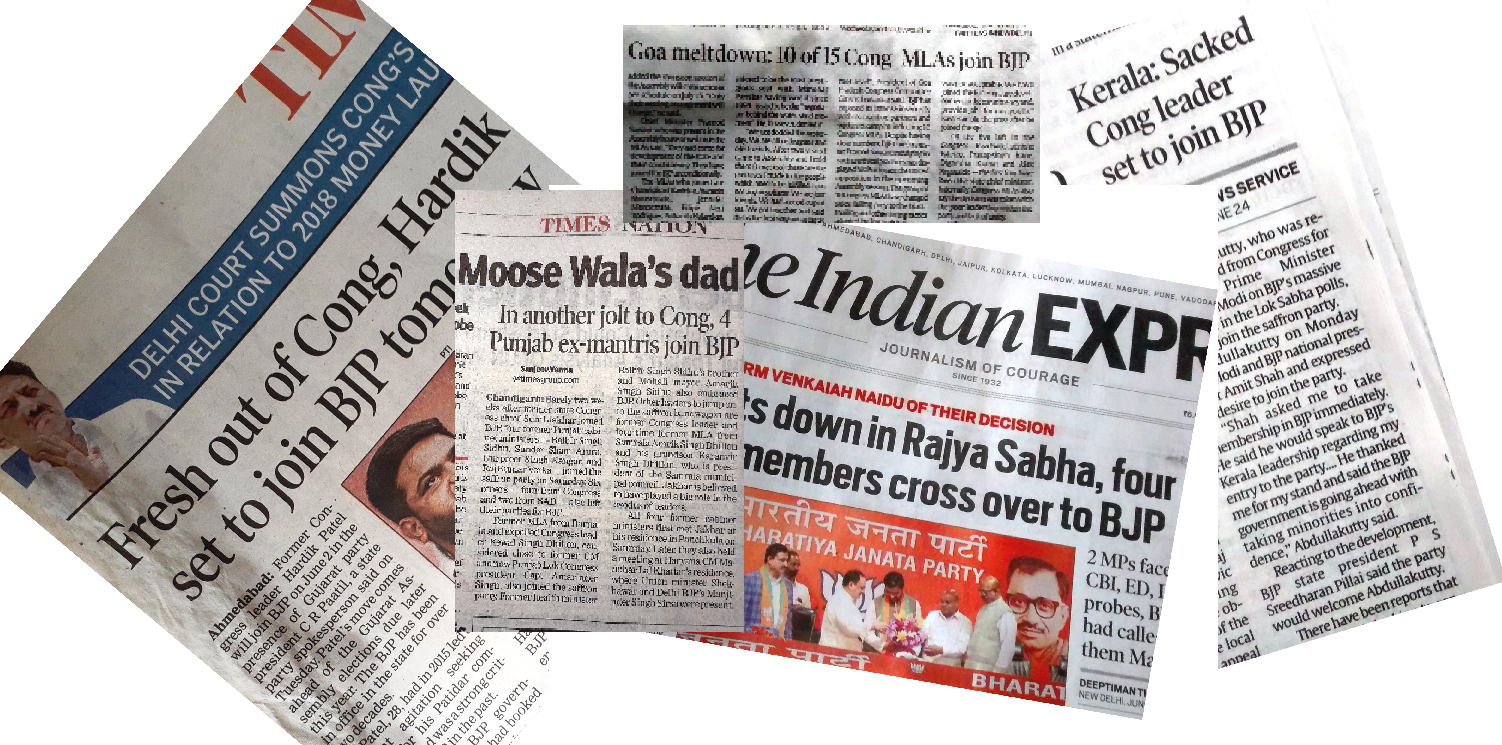
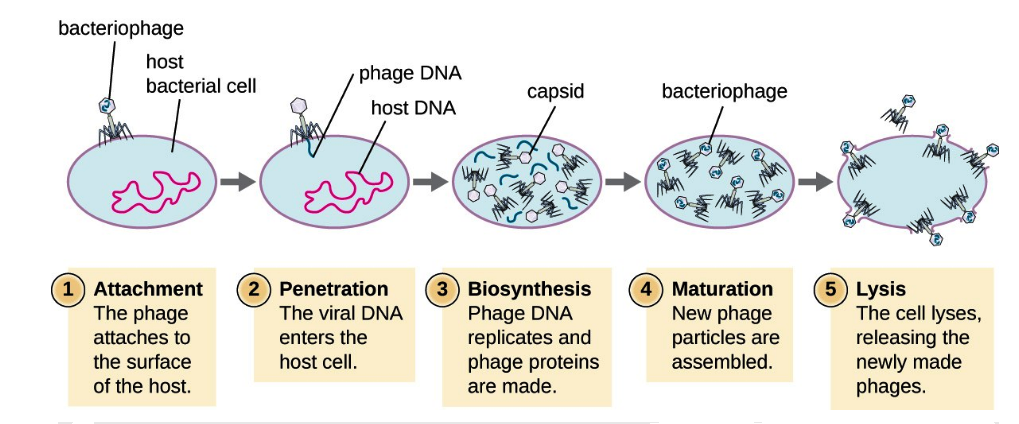
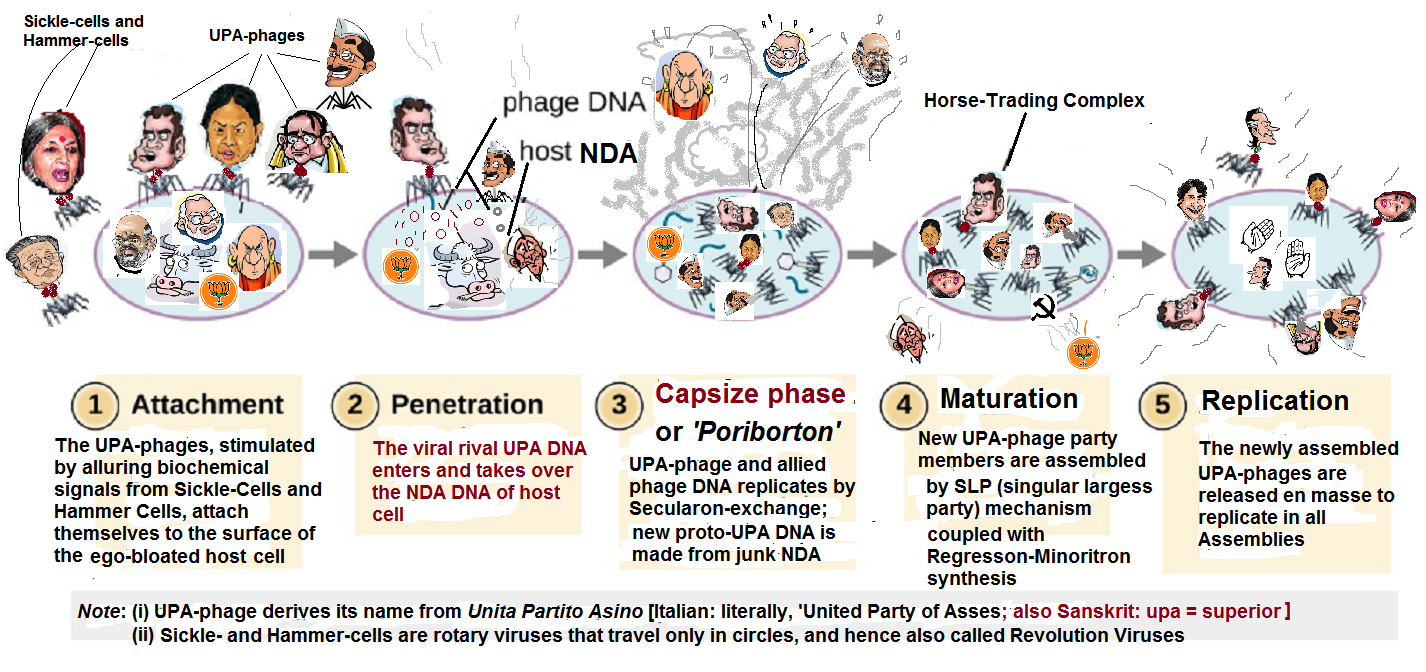
Defections from Congress and other Opposition parties to the BJP–led NDA will soon reach a Critical Mass; whereupon, the defectors and defecators will take over the NDA’s DNA through cellular-level dynamic transformations that are as effective, inexorable and deadly as the processes by which a virus takes command of a healthy cell.

Transformation and takeover of BJP in progress

1. How a migrating/invasive virus or bacteria takes over a healthy host cell

2. How migrating/invasive Congress-led members take over host BJP-led NDA cell

Afterword

My detailed research report is currently under review by a joint peer group of scientists from two of India’s most infamous, calumniated and globally disavowed academic institutes:   the Indian Institute of Fundamentalist Sciences (IIFS), Delhi, and the Institute of Lactile Sociodynamics (ILS), Kanpur.  It might be worth recalling (or perhaps it might not) that IIFS  discovered two fundamentalist particles— Secularon and Minoritron—that are as important to sociologists as the electron and the Higgs boson are to primatologists;  while ILS discovered the Regresson – the Backward-spinning cerebral particle, which has helped in formulation of the famous Creamy Layer Postulate regarding OBC Reservation that forms the bedrock of India’s affirmative action policy. 

Disclaimer: This report is based on my independent de jure research and largely theoretical interactions with senior members of the political  parties mentioned as well as other unmentionables, and backed by my professional knowledge acquired as Adjunct Liber Scholar with Master’s Degree in Prevarication & Associated Obfuscation from the globally disreputable  Rannoy Poy–Khadka Butt Institute of Unhinged Psephology, New Delhi. Any inaccuracies, baseless allegations, errors, misrepresentations or incomplete data that might have crept in through deliberate inclusion are entirely my irresponsibility.