Ancient writings, General ravings

A Couple of Receptions – Valentine’s Day special

Valentine’s Day always awakens my romantic nature, as I’m sure it does yours, O most Adored Reader.

Today’s February 13th—the Eve of this glorious Festival of Romance! The Eve of V-Day, that Ancient India gifted to the world under its many original names like Harappa’s ‘Belan Daine Din’, Bengal’s ‘Bela Teeni Dey’, and Tamilnadu’s ‘Vellum Tayen’ (please click here to see my full historical research paper on the origins of V-Day).

I therefore humbly present the first (and possibly, the last) romantic story that I’ve written in my long and inglorious career as writer.

As ever, your comments are welcome; as are rotten eggs and tomatoes, which may be couriered directly to our beloved Member of Parliament Shri Rahul Gandhi ‘s residential address. I believe poor Rahuljee needs to find some romantic interest in life other than Prime Minister Shri Narendra Modi, considering the way Rahuljee oscillates wildly between confessing his  ardent love for Modi  including hugging Modi and blowing kisses at Modi (and other MPs) in the Lok Sabha, and expressing his disgust and hatred for Modi and spewing abuse at Modi in and outside the Lok Sabha.

Bel Tinda Diwas ka Shubh Kamnayen!

Mr. Vaikuntan sipped his lemonade and gazed approvingly at the crowd milling about in the hall. Like him, they were all dressed in their wedding-reception best. The floor was a seething sea of shimmering saris and snazzy suits, slinky salwars and dashing sherwanis. There were quiet children in loud playsuits, wide men in narrow trousers, strapping women in strapless gowns. The chandeliers quivered with thundering bass-notes from the dance floor to the right, where lasses in daring skirts and lads in flaring trousers swayed and stamped. Temperature and decibel-levels hovered around one hundred, and conversation was conducted at shriek-level. The air was redolent with attar and Paco Rabanne, with the aromas of paneer pakora and dhokla-chutney being distributed by tireless waiters, with the heady scents of romance and celebration.

Mr. Vaikuntan drank it all in. He himself was dressed soberly: black trousers and a light-grey shirt that went well with the silver-grey streaks in his hair. He was tall, slim and clean-shaven, and wore a pair of thin-framed spectacles that might have given him a rather stern look…but for his smile. When Mr. Vaikuntan smiled (which he often did), the smile reached his eyes and his whole face lit up, making him look much younger than his forty-seven years.

He smiled now, as he gazed towards the stage where the bride and bridegroom stood before red thrones and wilted beneath the glare of video-camera lights. She, Rukmini, was clad in a simple yet stunning blue-and-gold sari; he, Varun, wore a charcoal suit, and their faces glowed with the light of love and promise. A steady stream of guests made their way up to the stage to greet and bless the couple. Mr. Vaikuntan himself had met them as soon as he arrived.

“You look wonderful!” he had murmured to the bride, quite truthfully, upon which her eyes had sparkled with happiness and she had rewarded him with a brilliant smile. He had punched the groom lightly on the shoulder and said: “Bless you both, take good care of her, lad!” whereupon, to his mild but pleasant surprise, the groom had embraced him warmly. But all that was half-an-hour ago, and now Mr. Vaikuntan was a little hungry…

“Isn’t Rukmini looking lovely?”

Mr. Vaikuntan looked up sharply. A woman of about forty was standing next to his chair. He rose courteously to his feet. “I’m Vaikuntan,” he murmured with a slight bow, even as his experienced eyes took in her fine dark-brown eyes and stubborn chin, her slender neck, the suggestion of plumpness in her nicely rounded figure beneath the green chiffon sari. Also he couldn’t help noticing her long, artistic fingers, and how well trimmed her fingernails were…

All this took about three seconds. Rather longer than usual for him, doubtless, due to the rather nice perfume she had on. Very subtle, it was, faint yet incredibly alluring, like a blend of champa blossom, roses and the scent of rain-damp earth.

“I’m Vasanthi,” she replied, her eyes grave yet betraying a twinkle of amusement as she looked into Mr. Vaikuntan’s eyes.”I’m a friend of Rukmini’s aunt, meaning her mother’s cousin Urmila…”

“How nice to meet you,” Mr. Vaikuntan responded cordially. “And I’m an old associate of Varun’s uncle.” She nodded pleasantly and they glanced towards the couple on stage and then back at one other.

“How quickly these little ones grow up, hmm?” Vasanthi said and laughed softly.

“Yes, yes, it’s amazing, quite wonderful,” Mr. Vaikuntan replied. He looked into her deep brown eyes, and suddenly, painfully, he was reminded of the wife he had lost to cancer eleven years ago. A moment, or perhaps an eternity, passed.

“Well,” said Vasanthi, “I’ll just go up and see them…so nice to meet you.” She laughed softly again, exhibiting a set of fine, brilliant-white teeth. Originals, Mr. Vaikuntan thought in passing, and watched her glide away to join the steady stream of people moving towards the stage.

From time to time, she nodded and smiled at people she passed. She paused next to a sofa, halfway down the hall, on which sat a little girl with a doll. The little girl’s name was Nikki, her doll’s name was Guddi, and she liked rasamalai, trains, Pokemon, cats, and her little brother Jayant, in that order. Mr. Vaikuntan knew all this because he had himself chatted awhile with Nikki before going up to meet Rukmini and Varun. As he watched, Vasanthi sat down next to Nikki and engaged her in what appeared to be a most animated conversation. At the end of it, Nikki laughed and clapped her hands in glee; Vasanthi rose, ruffled Nikki’s hair and moved on towards the stage.

On an impulse, Mr. Vaikuntan rose to his feet and went across to Nikki. She looked up and smiled in recognition. “Hello, uncle… Uncle, show me how to make train noises again!”

Obediently Mr. Vaikuntan sat down next to her, puffed up his cheeks, pursed his lips, and produced diesel locomotive rumbles. Nikki practiced making the sounds herself for a while. “Nikki, who was that…er…auntie who was talking to you just now?” Mr. Vaikuntan asked when Nikki paused for breath.

“I don’t know… I liked auntie, she told Guddi and me a funny story. She’s a very nice auntie,” said Nikki firmly.

“Yes, of course she is. Er…do you know Urmila auntie then?”

Nikki frowned. “Urmila auntie? No, I don’t know her…but mummy might know. There’s mummy, shall I go ask her?” And Nikki pointed towards a group of ladies a dozen feet away.

“No, no,” said Mr. Vaikuntan hastily, patting her shoulder. “It doesn’t matter. Look, I’ll show you how to make airplane noises now.”

He continued to watch Vasanthi while Nikki hummed and whistled and whooshed away happily next to him. Now Vasanthi was holding the bride’s hand, chatting with her. She leaned forward and whispered something in her ear, whereupon the bride blushed and smiled. Vasanthi turned and spoke for a while with the groom, who threw back his head and laughed. A few moments later, she descended from the stage and moved sedately towards the adjoining hall, where the buffet dinner had just commenced. But Mr. Vaikuntan kept his eyes on the couple. As soon as Vasanthi moved away from them, Rukmini turned to her husband and said something. He raised his eyebrows and shook his head, and both of them turned to look at Vasanthi’s receding figure. And then – this is what Mr. Vaikuntan found most interesting – and then both the bride and the groom looked at one another, smiled and shrugged helplessly before turning to greet their next guests.

Mr. Vaikuntan knew the signs. Rukmini and Varun had no idea who Vasanthi was! It happened all the time on such occasions, of course – especially big wedding receptions such as this one, where invitees numbered a thousand or more and where each side invited all their relatives and friends and friends’ relatives and their friends. One couldn’t expect the happy couple to know even a tenth of the guests, Mr. Vaikuntan reflected. And so gate-crashing – intentional or inadvertent – was all too common.

He waited for the rush to subside a little before making his way across to the buffet hall. As he had expected, the fare was rich: a combination of northern and western Indian cuisine. He gorged himself on puris and channa, followed up with two helpings of pulao and kurma, and rounded it off with a generous serving of dahi-vada. He allowed a pretty young thing to persuade him to eat a kulfi, and finally returned to the main hall with a cup of excellent coffee.

He found a comfortable chair close to the entrance and sat down with a sigh of contentment. It was nearing 10 pm, and already a little stream of people was moving past him towards the doors. A pleasant lassitude was creeping up on him; he knew he himself must leave soon…

“Well, Mr. Vaikuntan… I hope you enjoyed the dinner?” It was Vasanthi, smiling down at him.

At once he rose to his feet. “Ah yes, thanks, I did!” he responded. “By the way, I noticed you having a nice chat with a little girl in a red dress…”

“Oh yes, that’s Nikki. I know her parents quite well. You know, Nikki is such a delightful child…”

“Indeed?” Mr. Vaikuntan murmured. “Look! I see them coming up now…are you leaving together, then?” And there was a terrible gleam in his eye as he gazed at her.

Vasanthi turned around sharply, and her eyes widened as she saw Nikki trotting up the aisle towards them, doll clutched in arms. She was flanked by a young man in a safari suit and a young woman carrying a sleepy toddler.

“’Bye, auntie. Bye uncle,” trilled Nikki as she scampered past.

“Bye,” they responded.

Nikki’s parents nodded and smiled politely at them; they nodded and smiled back. Vasanthi stood frozen till Nikki and her family disappeared through the doors, and then she slowly turned and looked at Mr. Vaikuntan.

“Let us sit down,” suggested Mr. Vaikuntan gently but firmly.

She sat down next to him, her eyes locked in his.

“How long have you been playing this game?” Mr. Vaikuntan asked.

She hesitated, looked away and then back at him, and now her eyes were dark pools of despair.

“This is the second time I’ve done it,” she whispered, almost to herself. “Only the second time…and I get caught.” She broke off and drew a deep, shuddering breath. “I did it for fun, no, for…for… for the sounds of laughter, for the feeling that I belong somewhere.”

Her voice was still soft, but her words came tumbling forth, a cascade from some deep reservoir of pain. “I used to be a nurse at Cooper hospital. But I had to leave. To take care of my husband, he was terribly ill. He…he died ten years ago. Now I live in a working women’s hostel. In Bandra. The other women are nice, a few of them are friends, but they all have family, people to go out with, to visit on weekends, on holidays. I have nobody. Nobody. I help out at the children’s hospital in Khar, I love children, and the work keeps me from thinking too much. But the loneliness, do you know how it is to be alone? Really alone? To live in a grey room with nothing but memories, only memories? To spend endless evenings watching stale TV shows, Sunday afternoons staring at the wall, waking up wishing you didn’t have to wake up because you have no one to care for, to love, no one who cares for you, needs you, wants you… ” her voice trailed away and she closed her eyes.

Mr. Vaikuntan sat still, his eyes never leaving her face.

At length she opened her eyes again; they were bright with unshed tears. “I ask you this much,” she whispered fiercely. “Allow me to leave. Quietly. Allow me what dignity I still have.” And she rose and took a step towards the doors.

“Wait!” Mr. Vaikuntan jumped to his feet and took her arm. “I’ll see you out.”

They walked out through the doors into the warm night. Two distinguished-looking gentlemen stood above the steps – the fathers of the united couple, seeing off their guests.

Mr. Vaikuntan felt Vasanthi’s arm stiffen in his grasp as he confidently led her up to them. “Thanks so much, such a pleasure it has been for us to share your joy… God bless you all.” He shook hands with them in turn, Vasanthi folded her hands in graceful farewell, and then they descended the steps and strolled out the main gates on to the busy street beyond.

The two gentlemen watched them go. “Such a charming couple, hmm?” the bride’s father murmured. The groom’s father agreed, and each made a mental note to find out from the other who they were…but later on, for already more guests were queuing up to say goodbye.

On the sidewalk, Vasanthi stared up at Mr. Vaikuntan in wonder, her eyes glowing strangely. “Thank you…” she began.

“No, no!” interrupted Mr. Vaikuntan, still holding her arm. He drew a deep breath. Suddenly he looked nervous, unsure of himself.

“Look, please don’t misunderstand me,” he continued. “The fact is, I really do understand what made you come here…I understand you far better than you can imagine. Because I’m like you, I too know what loneliness is, it is what brought me here today…”

She gasped, but he went on with growing confidence. “You see, I’ve been at the same game for three years now. I work at a printing agency, I help in designing invitation cards and so forth. So I get to know about lots of wedding receptions and other such celebrations, and can choose among them.” He released her arm and looked at his watch. “Listen,” he went on earnestly, “I live in Andheri…so why don’t we take the same train, maybe we could talk on the way? And perhaps we could meet for dinner tomorrow. There is this big Rajasthani wedding reception at Mulund, or if you prefer South Indian, we could take in a Tamil affair in Matunga…”

Vasanthi and Mr. Vaikuntan were married three months later. The wedding was a quiet event at the registrar’s office, but they held a small reception for workplace acquaintances.

It was a grand success. Halfway through, Vasanthi happily whispered to her beloved Vaikuntan that there appeared to be far many more guests present than they had invited…

_______________________________________

[First – and last – published in 2004: at http://creative.sulekha.com/a-couple-of-receptions_102018_blog]

General ravings, Potshots

Lok Sabha elections 2024: why I’ll vote for I.N.D.I.A

O Gentle and Most Valued Reader, I begin this rant with an Affidavit in the standard UNESCO-disavowed format.  .

Affidavit
I, R P Subramanian, do solemnly swear, affirm and declare in this public forum as follows:
1. That I am a registered Indian voter.
2. That in the forthcoming Lok Sabha elections 2024, I shall cast my vote in favour of the Indian National Developmental Inclusive Alliance (hereinafter called ‘I.N.D.I.A’ which expression shall include all its splinter groups, breakaway factions, turncoats, defectors, defecators, and assigns).
3. That I undertake to cast my vote favouring I.N.D.I.A as declared above, barring unexpected and/or unforeseen events that might prevent me from doing so including and not restricted to death; grievous injuries caused by assault(s) by supporters of any and all political parties; Acts of God (which term includes Acts by any and all Religious, Secular, Communal, Communist, Woke, and Somnolent deities and prophets of all sexes and genders present and future); and any and all other force majeure events and phenomena.
4. That I execute this undertaking in full and complete infirmity and unsoundness of mind and senses, and under no compulsion or threats whatsoever from any entities, real or virtual.  

The provocation for my Affidavit is the recently concluded Lok Sabha debate on the No-Confidence Motion moved by the I.N.D.I.A coalition of Opposition parties against the BJP-led NDA coalition; a three-day debate that ended with the entire I.N.D.I.A coalition walking out of the House even before the No-Confidence Motion that they had themselves brought in could be put to vote.

Please don’t get me wrong: I don’t blame the Congress-led I.N.D.I.A coalition for walking out of the Lok Sabha. They did so only to escape further serious injuries to their already-bruised egos.

By the second day of the debate, the signs were clear to me—as clear as Rahul Gandhi’s development agenda for India— that the MPs from I.N.D.I.A were vying with one another in making supreme idiots of themselves as they spoke in the House. Indeed, only sheer will-power and extra-strong coffee gave me strength to hear and watch Rahul Gandhi himself prate about nothing in particular with his characteristic hoarse vehemence, oratorial incoherence, analytical incompetence and overarching adolescence—even as his colleagues cheered him on and thumped their desks—before exiting with an aerial smooch seemingly directed towards a cluster of women MPs in the Treasury benches (although a usually unreliable Congress source tells me Rahul’s smooch was actually aimed at PM Narendra Modi, for whom Rahul possesses deep affection and love).

But most painful of all was to hear and watch MPs of the BJP and other NDA parties, from Jyotiraditya Scindia to Modi himself, systematically tear apart and gobble down the MPs and constituent parties of  I.N.D.I.A with all the gentleness and grace of a pack of hungry wild dogs dining on a felled buffalo.

After watching this farce of a debate, O Dear Reader, I confess that I was wrong in my earlier prediction that the BJP will be wiped out in the 2024 elections. I now realize that it is the Congress-led I.N.D.I.A coalition that is in danger of being wiped out in 2024.

Because, judging by its disgraceful performance in the Lok Sabha these past three days, I.N.D.I.A has placed itself on the electoral equivalent of life support within weeks of its launch.

No amount of hagiographic reportage by Congress’ captive, Rahul-captivated media can conceal the harsh truth: that I.N.D.I.A was taken to the dhobi-ghats, beaten, wrung, and hung up to dry by the BJP-led NDA in the Lok Sabha.

Adding to my alarm at this latest evidence of I.N.D.I.A’s feebleness and the BJP-led NDA’s ever-increasing strength and popularity, is news from abroad that a leading American singer, Mary Millben, has now expressed her support for Modi.

Source: India Today.

I am slightly consoled by my Congress source’s assurance that Mary Millben’s support for Modi  doesn’t mean anything.  “Arre Subramanian-saar,” he says, “this Mary Millben is not even an American; she is actually an Indian Modi-bhakt living in the USA under false pretences, with some hidden agenda to create Akhand Bharat! She is a Gujarati girl; her real name is Meera Millie-ben…”

Yet I still worry.

India needs a credible Opposition.

India needs a credible alternative to Modi in 2024!

I.N.D.I.A needs my support to get off  its life support!  

And so, I shall vote for I.N.D.I.A in 2024…provided I.N.D.I.A still exists when the elections happen.

May I conclude with an inspirational slogan, which I hope Rahul Gandhi will adopt during his campaigns:

Voters of India, unite ‘neath the banner of I.N.D.I.A

You’ve nothing to lose but your brains, which we’ll replace with Pyaar!

Jai Hind.


General ravings, Potshots

Dreadlock Visions during Lockdown

[or, Hair Today…Gone Tomorrow]

When the Union Government announced extension of the Covid-19 lockdown till 17th May, I felt a sharp prickling sensation in the back of my neck.

The prickling sensation wasn’t because of fear. It was a familiar and increasingly irritating reminder that my haircut is long overdue— and that now I’ll have to wait at least two weeks more to have one.  It’s a hair-raising prospect; especially because for the last 40 years, I have with clockwork regularity gone to the barber every 45 days for a “double fauji bina kanghee wale” job.

I do believe short hair lightens the pressure on the brain. Deliberately shorn hair also helps when my hairline is receding just about as fast as my intelligence and memory.

Anyway: with every passing lockdown day, what remains of my hair grows in about thirty-seven different directions at varying rates in five distinct shades of grey and white. I can’t do a damned thing about it, because barber shops have all been closed,  and ‘social distancing’ prevents me from seeking the amateur assistance of a friend who has volunteered to do the job with garden shears.

Don’t get me wrong.  I don’t mind enduring this minor discomfort—after all, overgrown hair is such a trivial issue when millions are undergoing such hardship  in these difficult times.

But I am chagrined that even as my hair runs riot and my face increasingly resembles that of a depressed and slightly deranged hedgehog, I see a large number of public personalities—political leaders, celebrity journalists and the like—appear with perfectly coiffured hair on TV and online screens every day.  In fact, these women and men look exactly as well-groomed as they did in December 2019!

Me
(L) Me; (R) Hedgehog (image courtesy medicine.net). Note: I apologize for any unintended hurt feelings, injured egos or ruffled quills that I may cause to hedgehogs by drawing this comparison.

It is obvious to me that these well-groomed public personalities are flouting social distancing norms! Their haircuts are just too good; they can’t be lawnmower jobs done by family or friends. I am convinced that these women and men are covertly availing the services of professional hairdressers, so that they can look suave and well-trimmed while the rest of us watch our own faces disappear under the overgrown undergrowth on our scalps.

Unfair?

Perhaps…but  I don’t grudge these fine women and men the privilege of getting their hair groomed while the rest of us can’t. After all,  they are respected and popular figures who are doing all they can to boost the morale of the Indian public in these trying times. Naturally, they must look their best.

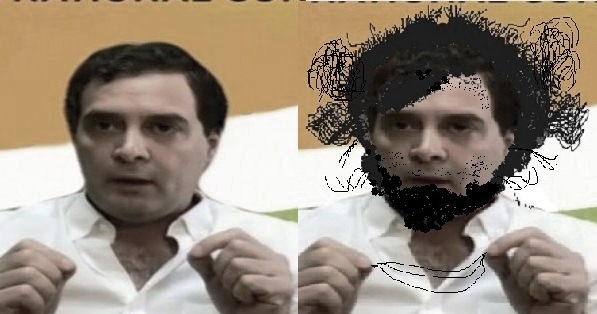
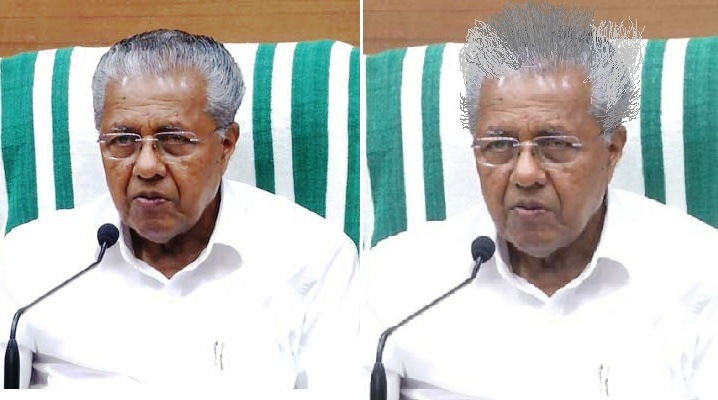
Still, it’s tempting to know what these public figures might have actually looked like today, if they had not availed the services of hairdressers during the lockdown.

And so,  I’ve created projected images – crude, but hopefully indicative – of what a select few politicians and journalists would have looked like today WITHOUT their haircuts.  To create these projected images I’ve used the beta version of an Algorithmic Profile Projection software, code-named ‘Tonsure 101’, that is being developed for the Intelligence Bureau by the internationally derided Prof. Iqbal Taklu and his team under a shadowy India-USA security cooperation  project that is so secret that it does not find mention in any public or private records, and indeed may not even exist.

I plan to crowd-source bail bond funds in my next post.

Actual look                                               Projected image

Union Home Minister Amit Shah
Amit Shah, BJP M.P; Union Minister, Home


Rahul Gandhi
Rahul Gandhi, Congress M.P

Mamata Bannerjee
Mamata Bannerjee, West Bengal Chief Minister

Pinarayi Vijayan
Pinarayi Vijayan, CPI(M); Kerala Chief Minister

Uddhav Thackeray
Uddhav Thackeray, Shiv Sena; Maharashtra Chief Minister

Shekhar Gupta
Shekhar Gupta; Editor-in-Chief, The Print

Arnab Goswami
Arnab Goswami; Editor-in-Chief, Republic TV

Jai Hind!

Musings, Potshots

Lessons in Economics – from Rahul Gandhi and from Suresh

I must share with you two really profound – and radically contrasting – lessons in Economics I learned today. One, from  Congress President and Prime Minister-aspirant Rahul Gandhi; the other, from my colleague-become-friend of some 24 years, Rickshaw and Thela (wheelbarrow) Operator Suresh.

First, Rahul, who “chose to explain a bit of economics to voters” while addressing a public meeting on April 19th at Bajipura (Gujarat). To quote from today’s Indian Express article [click here to read]: Suresh and Rahul

He (Narendra Modi) has taken money from your pocket, and you have stopped purchasing goods like shirts, pants, watches, and mobile phones.’ Rahul explained. ‘This led to the shutdown of factories in India and many labourers lost their jobs. The unemployment rate is now at its highest in the past 45 years.’

He continued: ‘Under the NYAY scheme, an amount of Rs 72,000 will directly go into the bank account of women. Then you will start shopping, and when you shop, the factory will start functioning, and the unemployment issue will be solved.’

He also said, if voted to power, ‘We will give 22 lakh government jobs in one year, which are currently vacant, and 10 lakh youths will be given jobs in various panchayats.’

Rahul’s insight really made me think, O gracious reader. In a weird and woolly way, it kind of makes sense, no?

Only one thing about Rahul’s economics troubles me: Rahul’s plan to create 22 lakh government jobs (+ 10 lakh quasi-government jobs). Since the 7th Finance Commission, even the lowliest central government employee in India starts with salary of Rs 18,000 per month; that’s Rs 216,000 (2.16 lakhs) annually. Which means that, even assuming that every one of Rahul’s 22 lakh new government employees draw only this minimum salary, the annual salary bill for these worthies will be Rs 47520,00,00,000.

That’s Rs 47,520 crores every year! At minimum government wages…

To me it seems a hell of a lot of money, just for the sake of having 22,00,000 more leech-like sarkari babus making life miserable for you and me and all other honest, tax-paying citizens. Especially so, because that Rs 47,520 crores is going to be forked out every year by honest, long-suffering income tax payers like you and I!

But then, I console myself, Rahul Gandhi has been advised on his NYAY scheme by globally renowned economists like our very own P Chidambaram, Arvind Subramanian, Raghuram Rajan, and also British Nobel Laureate  Angus Deaton and French economist Thomas Piketty. Undoubtedly there’s something  I’m missing, ignoramus that I am…

Enter, Suresh.

At my request, Suresh brought his thela over around 11 a.m and was helping me clear out some old furniture and stuff. As usual, over a break for a banana and chilled glass we discussed the state of the world. “Who will you vote for?” he asked. “I know I will not vote for AAP this time,” I replied.  “I’m more and more inclined to vote for Modi’s BJP-NDA…”

“I too will vote for Modi,” he said firmly. “Of course, I suffered a lot when the note-bandhi [demonetization, 2016] happened. All my earnings are in cash even today;  nobody pays a rickshaw/thela-wallah any other way but cash. And of course with prices always rising, it is a very hard life for a daily labourer like me. Besides, as you know, for much of last year, I could not work…”

In mid-2018, Suresh’s five year-old son was diagnosed with cancer. Thanks to the chemotherapy and the excellent medical care he received and continues to receive at the Delhi Government’s Lok Nayak Hospital, the child is now recovering well…but for Suresh and his wife, it has been a year of indescribable anxiety, physical and mental trauma….with the financial pressures (to raise over Rs 2 lakhs for the treatment, when there was no time to even ply his rickshaw or thela) only adding to their stress.

“But still, I think I will vote for Modi,” he repeated. “I think because of Modi, nowadays the sarkari-log, the babus are more scared to bully and exploit people like me.  The babus and other people are also more scared to do do-numbaree (black marketing). People tell me, arre look at price rise under Modi; but I tell them, I don’t think Modi is to blame for price rise.  I think the real reason for price rise is because people, more and more people, are greedy. People nowadays buy much more than they need, or can use; that’s the reason.”

He then described how, two weeks ago, he was helping a couple in the neighbourhood pack their belongings to move out of the city. “They had two wall-cupboards filled with only chaddars (bed sheets and bed-covers),” he murmured in awe.  “They had more than three hundred chaddars in there, single and double! Most of them were new, untouched.  If one couple buys so many hundred chaddars, why won’t prices of chaddars go up, sir? It’s like that with everything…”

Suresh’s words, too, made me think.

Unlike Rahul, who has a team of illustrious economic advisors, Suresh has none.

But  Suresh has something that I think counts for much more: common sense, that comes from experience of hard ground realities.

I’ll go with Suresh’s insights into economics.

Jai hind.

General ravings, Potshots

Political A-SAT and SAT

ASAT
Stellar vision?

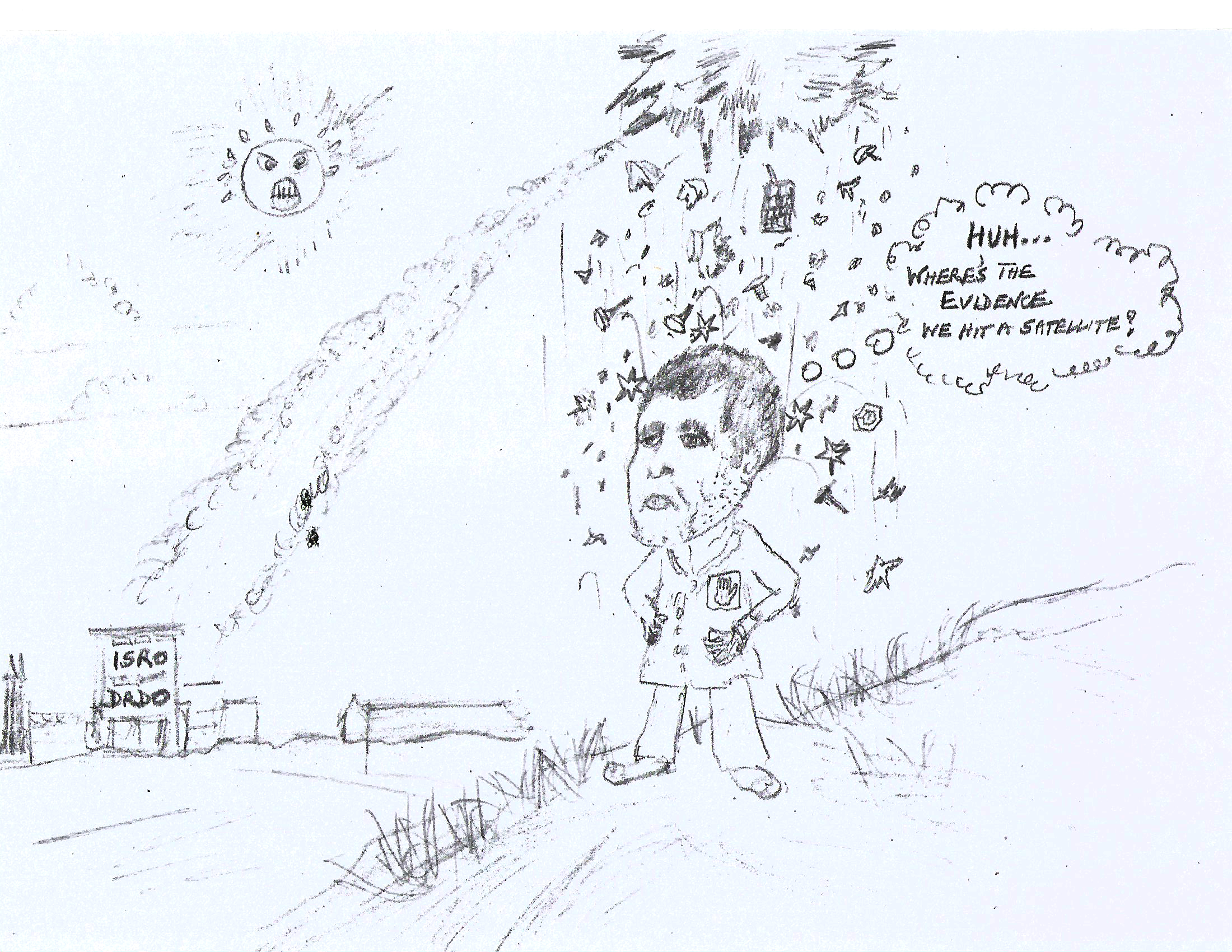
Ever since India successfully conducted its anti-satellite (A-SAT) missile test, our crass netas have given political twists to the event that would make a boa constrictor straighten in envy. Considering the kinds of comments that they and their acolytes are making, and with Lok Sabha polls looming over the horizon, we, the wee people, have good reasons to worry about whether our newly elected MPs will even understand, let alone be capable of handling, critical strategic issues such as space technologies, missile defense, nuclear deterrence and the like.

But there is hope! Unconfirmed and officially disavowed sources reveal that the Lok Sabha Secretariat is alive to the challenge, and is preparing a series of small booklets on science and technology for the enlightenment of our newly-elected MPs.

Here are a few sample definitions leaked from the draft Lok Sabha booklet on ‘Aerospace Science for MPs’:

 Satellite: This is simply another name for party follower or chamcha. Satellites can be of two common kinds:

  • ‘Polar’ or ‘Poll-ar’ satellites are rather unstable, and remain loyal only so long as their leader has a chance of winning in polls.
  • ‘Jio-synchronous’ satellites, also known as ‘Jio-stationary’ satellites, are more stable and loyal, because they are held securely to their leader/party by the attractive gravitational forces of G, 2G or even 4G.

Space Debris: The countless pieces of metal, plastic, composites and affiliated junk that are now orbiting the earth, and that have resulted from the break-up of old satellites launched by different countries during the last 50 years. About 97.9% of all the space debris is ‘clean’ debris, because it comes from NASA satellites sent up by USA. The remaining 2.1% of the debris is ‘dirty’ debris because it comes from Indian and Chinese satellites.

Escape velocity: The very high velocity with which politically connected fraudsters and affiliated crooks escape from India to other countries when a new government takes over in Delhi. ‘Relativistic’ velocity (also known as ‘Maxis’ or maximum velocity) is the highest attainable escape velocity, usually achieved only by crooks who are close relatives of political leaders.

Global positioning system (GPS): A wonderful technology that helps government to keep track of the escaped crooks, and guide them to safe havens when necessary.

Inertia: Describes the tendency of a government to remain forever in a state of supreme inactivity; or if roused into motion (usually by sting operation), to continue moving aimlessly along a fixed path to nowhere until halted by the ‘fictional’ force of Opposition.

Launch window: The auspicious interval of time for a new politician to launch her/his political career by filing nomination papers for Lok Sabha or assembly elections.  Launch window is determined by specialists in astral science called ‘astronauts’. The term astronaut itself is derived from the ancient Sanskrit: astra-nath—‘one who rules over stars’ (Ref: Goru Gauswamy et al., 4300 BCE. Space Explorations. Muttal Press: Takshashila).

Re-entry vehicle: Pathway for political deserters to return to their parent (or grandparent) party. As re-entry usually generates intense heat from party rivals, re-entering politicians require rings of protective coating. Hence, the re-entering politicians are popularly called ‘turncoats’.

Star wars:Spectacular electoral battles waged between stars affiliated to Bollywood, Mollywood, Tollywood and other non-Dawood studios. If firearms such as Shotguns are used by the star-candidates during poll campaigns, we call them ‘shooting stars’. Sometimes, the winning stars are given Cabinet portfolios, in which case we call them ‘acting ministers’ if they turn up for work; or else, ‘deadwood’.

Warhead: An especially strident jingoist, usually seen on TV talking-head shows calling for nuclear attack on neighbouring nations, political opponents, and occasionally, neighbouring panelists.

Jai hind!