Musings, Potshots

Sex, Bhagavad Gita, Oppenheimer…

[circa 16:15, 25th July] In a few hours I hope to be sitting at a movie theatre watching Christopher Nolan’s film ‘Oppenheimer’.

I’m writing this about a ‘sex scene’ in the film – and larger issues – even before watching the film. It’s a risky endeavour that I willingly undertake in the interests of underlining the invincibility of the Bhagavad Gita – a book that I enjoy reading over and over again, as did Robert Oppenheimer, as did and still do a host of  many other utterly rational, utterly atheistic men and women of science, Indian and non-Indian, Hindu and non-Hindu, since the Gita was composed.

I write this because a big hullabaloo has broken out in main-scream, social and anti-social media that this ‘sex scene’ disrespects ‘Hindus’ and ‘Hinduism’.

I write this because (1) I believe the hullabaloo is absurd and pointless, born of ignorance and compounded by narrow-mindedness; and (2) the hullabaloo is being amplified to kiloton levels by our Minister of State for Information & Broadcasting Anurag Thakur, who is reportedly accusing Nolan et al of ‘religious insensitivity’ and insulting the ‘Holy Book of Hindus’ because a scene in the film depicts a woman quoting the Gita while enjoying sex with Oppenheimer. (Oh, and half-a-cheer to you, Minister, for being a spoiler among other things).

Most alarmingly, Minister Thakur is threatening the Film & Censor Board of strict action unless they edit out the ‘controversial ‘ sex scene that has ‘hurt’ those ‘Hindus’ that he claims to represent.

I write this because the Minister has, by his comments and stance, deeply offended MY individual sentiments as a ‘Hindu’ who loves this universal philosophy that is ‘Hinduism’ and is captured so well in the Bhagavad Gita.

I do believe the Minister has got his argument wrong, utterly wrong. Out of ignorance—which is not a crime but a tragedy—but quite possibly, compounded by a sub-critical mass of narrow-mindedness.

I would urge the Minister to reflect on the truth that among all the great philosophies of the world, there is no other philosophy that celebrates the joys of sex more than this vast, insanely yet joyously complex collection of thoughts, writings, poetry, art, sculpture, dance and what-have-you that shelter under this nebulous, ever-changing (and therefore ALIVE) Umbrella Philosophy that we loosely call ‘Hinduism’… and which he so bravely sets out to defend.

What is sex, at its supreme level of enjoyment, but a meeting, a merging, an utter and true union, not merely of physical bodies but of minds and of  hearts powered by desires melting into one another and becoming infinitely greater than the parts, when pleasure becomes ecstasy, a union of seemingly separate Selves that, now united, blend as ‘One’, and in that indescribable timeless eternal moment of infinite bonded bliss, awaken, together, to the realization that this ‘One’ that they have become is the same, was never separated, from the One  whence springs all ‘creation’, all ‘reality’, all ‘life’, all ‘thought’, all ‘Self’…that in truth Time itself is an illusion, as is this cycle of Birth and Death?

Sex is natural. Sex brings great pleasure at its most physical ‘base’ level; sex between partners who adore, respect, love one another, can be an experience that is akin – nay, IS – as supremely ecstatic as the union of the Self with the Cosmic Self. 

There are many paths to experience this oneness. Sex CAN be one, as the great explorers of Tantra know. As lovers know.

What, then, is there to be ashamed of in sex, Mr Minister? What wrong, what ‘evil’, can there be in reflecting upon the One and Its attributes – so brilliantly described in the Vishwarupa of the Gita – while deep in sex?  Can you, should you, even try and hide sexual desire, sexual enjoyment, ecstasy, from ‘God’?

I ask this of the Minister without the slightest intent of disrespect or frivolity: Is it any surprise, is it any wonder that lovers, in their moments of sexual bliss, commonly cry out “Oh my God” and other terms of endearment involving deity – in every human language known, or in words unknown yet too well understood?  Surely the Minister and the flock he claims to represent must know this, and therefore should not, must not, be shocked or offended by this ?

All this and much more, about sex, ‘Hinduism’ understands. All this, the great sages have taught us and counselled us.

Hindusism does not associate sex with shame, guilt, furtiveness, ‘sin’, the way many other philosophies – that we call ‘religions’ – do.

That is why I love Hinduism—as do so many hundreds of millions, whether they are labelled ‘Hindu’ or anything else.

As one exactly twenty years older than Minister Thakur, I would urge him with all respect and affection to learn more about the meaning and the role of sex in Life as taught and portrayed in Hindu philosophy—perhaps with guidance from great teachers, perhaps in satsang. He could read about Krishna’s life and the layers of meaning that wait to be uncovered by the explorer in Krishna’s sexual frolicking with the Gopikas— Kamala Subramanian’s translation of the Srimad Bhagavatam is an absolutely brilliant introduction. He could explore the passionate writings of Kalidasa, Vatsyayana, a hundred others, in so many languages…he could read Pawan Varma’s superb book ‘The Great Hindu Civilization—achievement, neglect, bias, and the way forward’ to clarify questions and doubts he might have on Hinduism in a larger framework. [I will be happy to loan the Minister my copies of these – and other – books in case the Minister has difficulty in procuring them.]

Surely the Minister will understand, then, that neither ‘Hinduism’ nor the Bhagavad Gita needs ‘protection’ nor any ‘Defenders of the Faith’! Because the One, according to Hinduism, IS everywhere, the One is in the neutron and proton and electron, in all matter and energy, in the orgasm and in the organism, in the ever-changing lattices of electron exchanges that we call ‘thought’ and ‘idea’ and ‘memory’, the One is beyond Life and Death and Thought itself. To quote the Gita:

nainam chhindanti shastraani nainam dahati paavakah
na chainam kledayantyaapo na shoshayati maarutah

Weapons cannot cut It, nor can fire burn It; water cannot wet It, nor can wind dry It.

[I thank http://www.esamskriti.com for this nice, blithely ‘borrowed’ verse]

Last, I would urge the Minister not to allow ignorant, narrow-minded followers wearing ‘Hinduism’ T-shirts to coerce him into taking actions that might, in today’s social-media-driven society, reduce this wonderful, all-embracing, eternal philosophy that we call Hinduism into just another blind, soulless, ritualistic ‘religion’. To diminish this wonderful, all-embracing way of living and reflecting so that it becomes a travesty, to be obeyed without question by terrorized, brain-numbed, trembling, ‘God-fearing’ followers; a travesty presided over by heartless, cruel, greedy, moralistic, paternalistic and patronizing Interpreters, Lawmakers and Priests who rule by Fear, who see only sin in joy, shame in nature, crime in innocence.

And a last thought: I urge the Chairperson of CBFC Prasoon Joshi – a man of deep wisdom – and his colleagues to stand firm against any attempts by anybody  to censor this film – that I now rush off to see.

[26th July, 10:41. And now, 18 hours later, O dear Reader, having seen and delighted in this powerful film including the much-maligned ‘sex scene’, I urge Minister Thakur and his indignant followers to go and see the film. And, with my solemn declaration that I stand by every word I have written above, I post this herewith.]

Jai Hind.

Musings, Remembering

Cerebral cords and chords

[or, when Nothing threatens to become Something]

How time flies.

How time stands still.

Afternoon now. The 9th of July 2023. The mind in vacuous vacuum state, that so typically follows days of intense work.

I just did what I usually do…browse through a folder titled ‘Random Space’ in which I place all manner of scrawls on a continuing basis. This browsing activity acts on me like grazing on grass acts on cattle: it relaxes the fevered brain, especially when I delete utter rubbish that I come across (as happens quite frequently). 

Lest you don’t believe me, here’s something I found, written in February…in strangely similar mood. Strangely enough, it too dwells on grass grazed upon long ago…well, a refined form of grass anyway:  

[Verbatim…]

Feb 15th 2023:

Afternoon now.  After desultory work, editing news clippings after two days’ intense design and review of newsletter. What better time than to relapse into reminisce, to sink effortlessly through the decades to the dreamscape that was 1973–77…

Hawkwind plays, now, selected for me by that monstrous yet lovable Spotify algorithm. An album called, simply, Hawkwind. And now on the screen the calibri-11 and arial-9 exactly 17-point spaced mishmash of text melts and rearranges itself at dizzying speed, briefly I see shadowed faces in it, of friends of eons ago, Shankar and Raju, Kalyan and Raghu, Hocky and Sojan and Buddha and Rohan and Bhaiyya and Sen and Ronnie and Geeta and Meera and Shanks and so many others, appearing and dissolving in the cerebral grey-brown smoke that was so characteristic of Asharam’s hash (it came with golden seals on it, Farsi script too, all the way from Afghanistan, like chocolate bars but so much headier…12 rupees a tola.

A time when my monthly allowance—meant among other things for mess fees of 200-something rupees and for survival on the rest – was 300 rupees; at a time when dad’s salary back in Shillong was – what? About Rs 900 take-home?

Ah yes, I went through that 300 as smoothly as an otter through water, as Asharam’s hash went down the throat and lungs into the blood and brain. At least twice I ‘forgot’ the mess fees and asked dad for more; what were my excuses, I remember not.

And now, the lyrics from ‘Mirror of illusion’ caress the mind, draw me down, down the Great Chasm of Contemplation and hurl me over the raging, eternal,  Cataracts of Cerebral Chaos…

In the cold gray mask of morning I cry out
But no one feels the sound that I shout

And you don’t hear me through the tears you’ve shed
In the dreamworld that you’ve found
Will one day drag you down
The mirror of illusion reflects the smile

The world from your back door seems so wide
The house, so tiny it is from inside
A box that you’re still living in
I cannot see for why
You think you’ve found Perception’s doors
They open to a lie

Briefly, I emerge from the maelstrom at the shout of a remembered quote, echoing off the canyon walls:

One of the most important rules to follow on the Path to Contentment is to erase, on ongoing basis, any and all memories that evoke strong emotions:  good or bad. Especially the bad, which tend to burrow deeper and create far many more encrypted-password copies of themselves in different regions of the cerebellum.

[Alambusa IV: “Recombinant AI and other neuroquantal speculations”: Rakshasa Press, 2144 CE]

I try and follow this principle by efforts to keep up with what is being researched – and sometimes, discovered – in science. Usually, within minutes of reading something I achieve that utterly blissful amoeba-like state of complete blankness that restores equanimity with the blessed knowledge that with each passing second I understand even less than I did before, and that the end is in sight…but I’m never quite there (or I wouldn’t be writing this, would I?)

Consider this gem of an insight into the nature of ‘quantum entanglement’, from a most wonderful article dated 22 February 2023 in the Quanta Magazine  titled ‘Physicists Use Quantum Mechanics to Pull Energy out of Nothing’ [read it here]:

The trouble arises from the bizarre nature of the quantum vacuum, which is a peculiar type of nothing that comes dangerously close to resembling a something. The uncertainty principle forbids any quantum system from settling down into a perfectly quiet state of exactly zero energy. As a result, even the vacuum must always crackle with fluctuations in the quantum fields that fill it. These never-ending fluctuations imbue every field with some minimum amount of energy, known as the zero-point energy. Physicists say that a system with this minimal energy is in the ground state. A system in its ground state is a bit like a car parked on the streets of Denver. Even though it’s well above sea level, it can’t go any lower…”

I just love this idea of a ‘peculiar type of nothing that comes dangerously close to resembling a something.’

It reminds me of the description of the One in every religious book I’ve read.

It also reminds me of exactly how I felt when I first heard Rahul Gandhi explain, at length, his vision for India’s socio-economic development.

[Mercifully, this 5-month-old reminisce on nothing, tantamount to nothing, ended here…indeed, I’d forgotten all about it till today. ]

How time flies.

How time stands still.

Quick! Hit the delete button!

Musings, Potshots

Showing the British that it’s time to…er… drop the matter

It’s not often that I praise anything our government does.

Indeed, O patient and valued Reader, you might know that I’ve often taken pot-shots—if not broadsides—at the government; in this blog, and also in the edit-page columns of the Indian Express and other newspapers during those long-gone and more tolerant decades when they thought me fit to publish.  And I dare say I’ve always tried my best to ensure that my artillery barrages of fresh gobar, shaani, and other avatars of feihua and yamasimba are directed evenly across the political spectrum, from Left to Right:  from CPI(M) and its rabid fellow-travellers through the caste-ironed Dravida gangs and cow-belt Dals,  across the scandalous scandal-rocked Congress and apoplectic  AAPologists, to the tunnel-visioned BJP and Muslim League legions.

But today I must praise the government. Aye, I must praise this very NDA government,  led by Prime Minister Narendra Modi of the BJP.

Because this is the first time since 1997, when the late prime minister I K Gujral dismissed Britain as a ‘third-rate power’, that I’ve seen any Indian government or Indian political leader show the gumption and courage  to tell the British government what it is and what it should do with its behaviour towards India since 1947—behaviour that is a toxic  khichdi of arrogance, superciliousness, racism, contempt and plain hostility; behaviour that is, sadly, all too eagerly lapped up by many fawning Macaulay-haunted muttals among the English-educated citizens in our country.

Yes, today is different.

Today, the fetid vapours of decades of obsequiousness to Britain have been swept away by a zephyr of pure, clean desi air…and quite possibly, those fetid vapours will soon descend on the British diplomatic corps in the heart of Delhi, India.

Today, you see, the Indian government is constructing a public toilet right opposite the British High Commission in the capital.

Perhaps with this the British will learn to recognize why, when, where and how they should drop the matter. They might not discern the new flush of optimism that sweeps across India today; but surely they will discern – and tremble and gag – at every flush from the new public toilet.

Could there be a finer example of non-verbal diplomacy at its best?

Why, it conforms perfectly with the motto that I learned from my school: St Edmund’s, in Shillong, run by Catholics from Ireland (ah yes, those wonderful Irish teachers knew their Britain, and how to deal with the British, better than anyone else).

facta non verba.

Deeds…not words

Well done, Narendra Modi , S Jaishankar, et al.

Jai Hind.

General ravings, Musings

ChatGPT, and the Era of AI…AIiiiiyeeeee!

Has creativity ended…or only just begun?

Today I tried out ChatGPT.

ChatGPT is a ‘chatbot’ developed by OpenAI and launched in November 2022.  It can write virtually anything at all—stories, kid’s tales, essays, poems, lyrics—in any style you choose (however crazy you want it) in less than a few seconds.  All you have to do is type in your instructions in a little box. Try it out here.

So, I asked ChatGPT to write this:

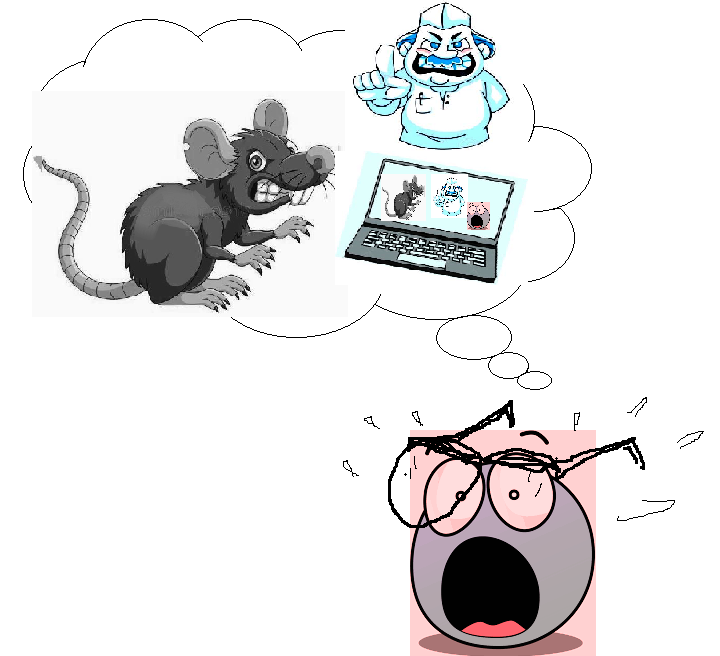
Poem in Edgar Allan Poe style on rat and politician

The response I got, in about two seconds, was this:

Once upon a midnight dreary,

While I pondered, weak and weary,

Over many a quaint and curious

Volume of forgotten lore,

While I nodded, nearly napping,

Suddenly there came a tapping,

As of someone gently rapping,

Rapping at my chamber door.

“’Tis some visitor,” I muttered,

“Tapping at my chamber door –

Only this and nothing more.”

Ah, distinctly I remember

It was in the bleak December,

And each separate dying ember

Wrought its ghost upon the floor.

Eagerly I wished the morrow;

Vainly I had sought to borrow

From my books, surcease of sorrow

Sorrow for the lost Lenore!

For the rare and radiant maiden

Whom the angels named Lenore –

Nameless here for evermore.

And the silken sad uncertain

Rustle of each purple curtain

Thrilled me – filled me with fantastic

Terrors never felt before;

So that now, to still the beating

Of my heart, I stood repeating

“’Tis some visitor entreating

Entrance at my chamber door –

Some late visitor entreating

Entrance at my chamber door;

This is it and nothing more.”

Presently my soul grew stronger;

Hesitating then no longer,

“Sir,” said I, “or Madam, truly

Your forgiveness I implore;

But the fact is I was napping

And so gently you came rapping,

And so faintly you came tapping,

Tapping at my chamber door,

That I scarce was sure I heard you” –

Here I opened wide the door;

Darkness there and nothing more.

Deep into that darkness peering,

Long I stood there, wondering, fearing,

Doubting, dreaming dreams no mortal

Ever dared to dream before;

But the silence was unbroken,

And the stillness gave no token,

And the only word there spoken

Was the whispered word, “Lenore!”

This I whispered, and an echo

Murmured back the word, “Lenore!”

Merely this, and nothing more.

Back into the chamber turning,

All my soul within me burning,

Soon again I heard a tapping

Something louder than before

“Surely,” said I, “surely that is

Something at my window lattice;

Let me see, then, what thereat is,

And this mystery explore –

Let my heart be still a moment

And this mystery explore;

‘Tis the wind and nothing more!”

Open here I flung the shutter,

When, with many a flirt and flutter

In there stepped a stately Rat of the Capitol

Not the least obeisance made he;

Not a minute stopped or stayed he;

But with mien of lord or lady,

Perched above my chamber door –

Perched upon a bust of Pallas

Just above my chamber door –

Perched, and sat, and nothing more.

Then this ebony bird beguiling

My sad soul into smiling,

By the grave and stern decorum

Of the countenance it wore,

“Though thy crest be shorn and shaven

Thou,” I said, “art sure no craven,

Ghastly, grim and ancient Rat of the Capitol,

Tell me what thy lordly name is on the Night’s Plutonian shore!”

Quoth the Rat: “Nevermore!”

Oh, and if this wasn’t enough,  ChatGPT also offered me a brief, almost apologetic remark that it had created this poem based on Poe’s broad style as in ‘The Raven’ and ‘House of Usher’, and that of course this poem did not in any way reflect or represent Poe’s own work.

Incredible, isn’t it?

But I did something more with ChatGPT, O long-suffering Reader, in the interests of humanity and what remains of my equanimity and sanity.

  I asked myself: what would ChatGPT write if I repeated the SAME request? Would it produce the same poem? Would it repeat itself, plagiarize itself?

And so I logged out of ChatGPT; cleared all cookies and logged in afresh after five minutes (just to give ChatGPT enough time to forget me, I chortled cunningly with all my Jurassic wisdom); logged in again, and once more typed in the following:

Poem in Edgar Allan Poe style on rat and politician

The response I got, in less than a second, was this:

In the dim and dreary streets,

Where the rats scuttle and scurry,

Lives a politician, sly and fleet,

With promises smooth as a cherry.

He speaks of change and progress,

But in his heart there is rot,

For he’s a rat in human dress,

And his words are nothing but a lot.

He’ll steal and lie and cheat,

And grin with a toothy smile,

But all his constituents will eat

The scraps of his dishonest guile.

And when the people cry out in pain,

He’ll simply shift the blame,

For in his eyes, they are all the same,

Just pawns in his twisted game.

So beware, my dear friends,

Of the rat in politician’s clothes,

For his deceit never ends,

And his heart is black as those…

These poems are so totally Edgar Allan Poe-ish that ChatGPT could bring a lawsuit against the estate of Poe for having plagiarized its own style – even though he wrote his stuff 200 years ago – and obtain court verdicts in its favour.

ChatGPT is infinitely more creative and original than any human.

It even makes strong and largely accurate value judgments on creatures like rats and politicians!

But it gets better…or worse.

ChatGPT is only textual. Young friends cheerfully tell me that already, there are AI thingies like ChatGPT available for trial that can compose equally original and remarkable audio and visual works based on your typed-in instructions—however wacky, however outlandish the instructions are.

So, we can all look forward to creating, in less than the time it takes to flick a paint-brush or pluck a guitar string, audio-visual compositions with elements like the following:

  • Blues song in the style of John Lee Hooker with lyrics on Narendra Modi,  Rahul Gandhi, bedbugs and soggy samosas
  • Oil painting in a style fusion of Don Martin, Constable and Botticelli with a sleazy Gurgaon mall as backdrop and featuring Vladimir Putin, Roger Waters, Asaddudin Owaisi, three constipated armadillos, the Ross Sea, and Greta Thunberg with her “How dare you!” look.

Our AI creations have become infinitely more creative than us.

I’m now convinced, O gentle Reader, that after 200,000 years of strenuous efforts at self-annihilation, we humans have finally come close to achieving the evolutionary equivalent of shooting our collective creative arses right off the planet with these latest steps forward in our technological progress. and intellectual retrogress.

Perhaps it’s a damned good thing, too. George Carlin would certainly have agreed.

Still…I can pound away at my worn-out old clay pot, missing anything between 3 beats and 7 beats in every 48 beats in utterly chaotic manner.  Like so:

I bet no AI thingy can do THIS as horribly as I can.

At least, not yet…?

Musings, Remembering

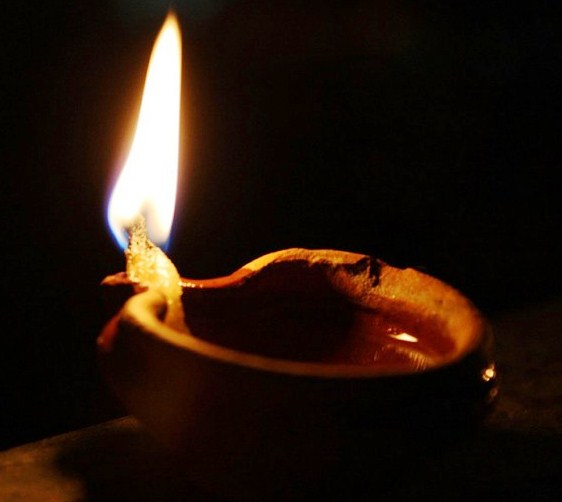
The Lamp of Life…and Death

Today’s Saturday; a day to go before Deepavali dawns.

Death floated lazily over me today morning, as She so often does.

Yea, today I saw Death as She. Tomorrow perhaps Death will be He; or perhaps It; or simply the One.  Death takes infinite forms, Death rules us all, Death alone among all Gods and Prophets and other fantastic creatures with which we populate our skies and imagination is ever close to us, from the day we are born. 

As a dear doctor friend puts it: by far the most common cause of Death is Birth.

No, no, there’s nothing ‘fatalistic’ or morbid at all about discussing Death. In fact, the eve of Deepavali is such an appropriate time to muse on Death; for Death is the End and the Beginning of all things including Time itself.

“Yama, Death, is never to be feared…only respected,” another dear friend had once counselled me, long ago, at a time when she —and we—knew she would die within weeks; a time when I felt the numb desolation and dread that you have felt, all of us have felt, with the realization that one, whom you love dearly, is going to die soon.  “Sure, fear pain if you must; but never fear Death. We’re all afraid of pain, of becoming helpless, dependent on others …but Death ends all pain, ends fear…and so never fear Death. You need not invite Yama…He will come when He has to! You needn’t wait for Yama’s arrival, he is never late. But you must respect Him when He arrives.”  

The dear friend was Jaya; my mother. The conversation took place over 26 years ago…the morning of 2nd August 1996. She’d gone through a few days of mild, recurring headaches, and when she’d experienced a sudden dizzy spell our neighbor and doctor-friend advised her to get a routine scan just to rule out the possibility of a ‘mild stroke’. So, we called the scanning centre and got an appointment for the next morning; and Jaya and I took an auto-rickshaw to the scanning centre – she vociferously criticizing me and dad all the way for needlessly fussing, and wasting half-a-day (she had a book of hers to proofread, another one to write with a tight deadline), and declaring that it was all a complete waste of time and money, and that just to prove she was fitter than any of us, we would walk home the nine kilometers from the scanning centre.

Well… we sat around at the centre and waited our turn, and I remember there was a little kid there waiting like us with his young parents, the kid was teary-eyed with pain but bravely silent—a terrible spinal injury, his anxious parents told us—and Jaya chatted with the little tyke and teased him and even got him to smile (she had a magical way with children); and then our turn came and I stood next to her while they did the scan, lead-lined coat and all, and even then I knew something was seriously wrong because I had to hold Jaya steady on the trolley, her left arm and leg kept sliding off though she was quite conscious; and then the doctors came out of their little console room and asked permission to do a contrast scan or MRI or something. “Sure…but why?” I asked. “We’re seeing something we’re a little concerned about, we want a better look at it,” they replied. So they injected her with a radio-dye and did the scan again while I stood beside Jaya, and then they took me into their little room and showed me what their screen was showing them, and I forget their exact words but the image on the screen and some of their words phrases are burned into the mind. Mass lesions. Temporo-parietal region. Aggressive glioma. In essence, she was in the terminal stages of a brain cancer.

And after we returned home—of course we didn’t walk—and told dad, and we called brother Bala who was in Bangalore, the enormity of the situation hit like a tidal wave, and Jaya was calmest among us, and she took my hand and led me up to the little corner which was her puja room and she lit the lamp and we had this little chat about respecting Death, and she made me vow that I would not let any surgeon’s knife come near her.  She wanted no surgery, no medical interventions. She just wanted to be at home with us. She made me vow by the lamp of the little puja-room upstairs, the lamp that I’d always lit for her from when I was a kid whenever she couldn’t light it herself because she was away, or during the time she’d suffered burns from batik and taken months to recover.

And so I vowed.  

Jaya stayed with us at home for two weeks, growing weaker by the day yet almost gently, in little pain other than the on-off mild headaches…she kind of faded away till the night of August 17th when she slipped into coma and we moved her to a hospital where a wonderful doctor took her under his wing, a doctor who knew precisely what to do—and perhaps as important, what not to do. She stayed there for ten days, till Death came for her on the 27th August.

Sorry, gentle Reader, I didn’t expect to meander down this path of personal memory when I started this; but I think that’s the nature of the strange, misty trails that Death sometimes allows us to walk awhile, alongside with those whom She has come for. You too must have walked these trails…they transcend time and space. I mean, here’s something that happened 26 years ago; yet it’s as clear as it happened a moment ago, while I can’t remember anything about yesterday or even much of what’s happened today since I saw Death a few hours ago, while lying on my yoga mat out on the terrace.

Today morning Death took the shape of a bird; a kite, to be precise.  Even before I opened my eyes I knew Death was approaching; for the quiet of early morning was shattered by a sudden frenzy of chirping and cheeping and chattering, and hundreds of pigeons and mynahs and bulbuls and doves and sparrows took flight and squirrels and chameleons and garden lizards scampered and scuttled in a mad scramble for cover among the leafy boughs of the park trees or behind walls and flower-pots or beneath bushes and roofs and piles of leaves.  The kite floated lazily in an ever-widening circle, high overhead, ever higher, till She disappeared from view beyond the edge of the awning.  

The silence endured awhile…but presently, the Wild-Creatures’ all-clear signal was given and the birds and squirrels and lizards and the rest of them returned to their normal morning activities. For a little while, it seemed, there was a new watchfulness in them, perhaps because they’d been reminded of Death, inexorable, inevitable; up there, down here, among us, unseen, watching and waiting, waiting to pick us up at the appointed time. But very soon they were all cheerful and boisterous as before, any fleeting fear evaporated, forgotten.

Perhaps this is as it should be with Death.

Yudhisthira of Great Vyasa’s eternal Play, the ever-questioning Seeker, that impulsive, often unthinking, ever-self-doubting human whom each one of us resembles to some degree,  got it right in his interrogation by Death:

Yama: And what is the greatest wonder of the world?

Yudhisthira: Every day, every moment, we see living creatures depart through the Gateway of Yama…yet we live as though we are immortal.  

We live as though we are immortal. We must. It is right that we live Life without fearing or obsessing about or dreading Death. What is Life but a fleeting spark in the timeless, dimension-less Realm of Serenity whence comes all that is and was and shall ever be, to flicker and dance awhile in this dream we call Reality and thence return? The Realm that is the Supreme Singularity, the One, the Maha Black Hole whose Event Horizon is the Gateway we call Death?

Omar beheld it so clearly, expressed it so joyfully:

What, without asking, hither hurried whence?

And without asking, thither hurried hence!

Another, another Cup to drown

The Memory of this impertinence!

Death is a mercy, a gift, a blessing, the Lamp-Bearer on the Path Home. Death is a wonderful reason for us to live Life to the fullest; lives that don’t cause others or our own selves hurt or pain or sorrow or despair; lives of joy and laughter and light-heartedness and contentment and exploration and discovery and reflection, of compassion and love and fulfilment.

Happy Deepavali.

Musings, Remembering

Nation Notions

I was with a friend in her car. In the back were three more friends, all women, one of them Indian, the other two German:  a mother–daughter duo.  

It was the evening of January 25th, 2020, cloudy and chill at dusk. We were caught in a traffic jam—the only saving grace being that we were on the lovely Amrita Shergill Marg, bordering the Lodhi Garden in central Delhi, and so there was plenty of foliage (albeit blurry) to look at and discernible quantities of that rare element, oxygen, in the diesel-and- petrol -scented air. 

After about 30 minutes of crawl-and-halt, we drew alongside a small group of policemen, who were trying with limited success to keep motorists to their lanes.

“Jai Hind,” I greeted them, as I always greet personnel of our armed forces and police.

 “Jai Hind,” they responded.

“What’s going on?” I went on in my semi-tapori Hindi, “Why this jam?”

“The result of a little VIP transit, sir…it’ll all be cleared in a few minutes.”

I thanked him, and we sat in silence for a moment. And then my young German friend spoke up softly, clearly, in English: “Why did you say that to him?”

Puzzled, I looked around at her. Her Indian friend giggled but didn’t say anything. “Say what?” I asked.

“You said ‘Jai Hind’ to that policeman…why?” she murmured, now slightly embarrassed. Her mother, who spoke very little English, looked on in bemusement. Her Indian friend giggled again, in a slightly self-conscious way.

The question was simple, perfectly straightforward;   but in a flash I realized what it was she was really asking and why she was asking; and what the young Indian’s slightly nervous giggle might mean too. It was January, 2020—that was the time when the Shaheen Bagh street blockade was at its peak; when young women and men not just in India but across the world were charged up with the heady passions and revolutionary slogans of the quaintly-oxymoronic  ideology known as Left Liberalism; when any word, any sign, of showing solidarity with or pride in or support to even the idea of India was not only old-fashioned but had somehow become equated to becoming a ‘Modi-bhakt’, a ‘nationalist’, a ‘fascist’, an anti-Muslim fanatical Hindu. In India, and across the world.

It was a time when even uttering ‘Jai Hind’ more or less branded me as a narrow-minded bigot unless otherwise proven…or clarified. 

The two young women were – are- very dear to me; the question was honest, direct and clear; and so I thought awhile before I replied.  “’Jai Hind’means ‘Hail India’, or ‘Victory to India’ if you like,” I said. “I greeted that policeman with ‘Jai Hind’ because I am proud of my country, I love my country, and tomorrow is our Republic Day—the day when, in 1950, a couple of years after winning independence from British rule, India adopted its own Constitution and became a full-fledged Republic.  So then,  for the first time we Indians had drawn up and given ourselves our own rights, our own guiding principles to live by, the systems by which we would govern ourselves and so on…all the things that we had fought for and won,  and that we must hold on to and defend.  And so January 26th is a good day to remember.  A good time to say ‘Jai Hind’, and of course that’s why ‘Jai Hind’ is a good way to greet military personnel, police…”

I trailed off, wondering whether I’d made any sense at all. She’d listened attentively as I spoke; silent, clear-eyed, nodding slightly. 

“Ah yes, of course, now I see,” she murmured. In the meanwhile her mother, who had been listening as intently to our exchange, asked her daughter to explain in German, which she promptly did.

And then, both of them smiled and chanted: “Jai Hind!”

And we all chorused Jai Hind, and soon the jam cleared, and merriment returned and dissolved the tedium.

A trivial episode, no doubt; but for me it was important…and lingers in memory.  

I will always be grateful to my German friend for her question.

It helped me think a little, reflect a little, learn and re-learn and un-learn much more than a little.  About India, about what this insanely chaotic, wonderful nation means and what it is founded on, and what holds it together…and what can and does tear it apart.

Jai Hind.

General ravings, Musings

A lament for Civil Uniform Code

I wept when they told me he was dead.

I wept all the more bitterly, because I’d never known he’d lived.

With these words – whose source has vanished from memory and is untraceable even by her exalted Holiness Google Devi  – I dedicate this mercifully short ramble to the eternal spirit of one of the greatest spiritual teachers humankind has ever been cursed with: Alfred E Neuman, mascot of the long-deceased and bitterly mourned MAD Magazine, USA.

“What..me worry?”

 It is with the angst in these words, O Most Noble Reader, that I lament… because I’d never known how important the Uniform was, or is, to college students.

I lament as I behold the Great Non-Issue Over Uniform that started in Karnataka a couple of weeks ago and is now exciting and inflaming passions among people across India—young and old, infants and geriatrics, irrespective of our castes, classes, religions, races, sexes and all the other important and puerile characteristics that make us all human, inhuman, sub-human and uniquely Indian.

I weep in empathy with today’s youngsters, who are devoting so much of their time and creative energies in agitating for what they hold as their ‘religious freedoms’ to wear Hijabs and Scarves and Burqas and Shawls of assorted hues to their colleges and railing against the directives of their educational institutions and the Karnataka government that disallow them to do so.

But I also weep in remembered joy, at the realization that I and others of my age had experienced and practised much more genuine liberalism, enjoyed much more genuine freedom—of thought, of belief, of choice, of action— in our seemingly backward colleges in our seemingly primitive times, 50 years ago, than the agitated and agitating youngsters who inhabit today’s so-called Modern Mainstream India.

I studied in Shillong, Meghalaya from the early 1960s to the mid-1970s.

First, at a missionary-run boys’ school where we were taught, pretty early on, what the Uniform meant.

It meant just that: Uniformity.

Wearing the Uniform meant shedding all our conceits, all the egoistic notions we had about ourselves— our homes, our privileges, our outside lives and identities. We left all this baggage in a heap outside the school gate. In school, wearing the Uniform, we students were all the same and we were all treated the same.

We were learners, expected to learn what we’d come to learn. We were all expected to obey the school rules.  

And no rule was stricter than the rule about wearing the proper Uniform…which meant complying with the strict norms regarding design, quality, pattern, and hue prescribed for everything from shoes to sweater, socks to shirt, trousers to tie to blazer. 

Corporal punishment, progressing in intensity from a resounding slap to a severe caning, was the standard punishment for breaking the rules including the Uniform rule.  The canes were chosen with care by the Executioner from an array of options, ranging from stout local bamboo to the incredibly flexible, excruciatingly painful Malacca cane that occupied a special place of honour in the Principal’s Office (and whose ministrations I am glad to say I escaped). The caning was administered, if you were lucky, on the palms of your hand…or else on the seat of your trousers as you helpfully if unwillingly bent over a chair.

But here’s the interesting thing:  back in our time, in that school run by the strictest and most wonderful Irish Catholic missionaries, you could wear anything you felt like wearing that announced your religion or identity (or lack thereof) so long as it didn’t obscure the Uniform…and so long as you were prepared and capable of tackling the not-so-loving attentions and ragging of your colleagues.  

So, in school you would see  the occasional kufi caps, vibhuti marks, kadas, threads round wrists, crosses round necks, turbans, and so on…all these were just fine.  The Authorities really didn’t give a damn about what religion or social stratum or whatever any of us belonged to.  And because of that, all of us too very early on learned not to give a fig about what religion or social stratum or whatever any one belonged to.  We studied, we played, we ate and drank, argued, raged, fought, got caned, mourned and celebrated together and as equals. Because we were taught so, we discovered and knew we were at our core all the same.

Well…that was school.

In the missionary-run college too, the Authorities were very strict about certain things: like punctuality, attendance records, class discipline, performance in the quarterly tests, and suchlike.

But we had NO UNIFORM CODE in college.  Nothing was disallowed in attire; nothing was compulsory in attire.

For the simple reason that, all of us having crossed the age of 16, the Authorities treated us as reasonably sane adults, and therefore expected us to behave as reasonably sane adults in all matters including attire.

And I do believe we students kept our side of the bargain. We wore what we liked to college; I personally chose the habit of an advanced derelict (and behaved as one), which has since then become my lifestyle.

And to the best of my recollection none of us ever roamed around naked on the campus – at least not during class hours and/or when sober.

Coming back to today’s lunacy playing out over Uniform…

 I am all in favour of a Strict Uniform Code in schools. Because the Uniform is an important part of creating a ‘level playing field’ in school, as it is in the military services. It helps kids shed egos and pre-conceived notions about themselves and about others, it helps them make friends and engenders team spirit, it gives them courage and wisdom to fight and win their individual and often lonely battles against prejudices and discrimination outside the campus, throughout life.  

But I believe it is utter madness, sheer stupidity, for the Authorities in Karnataka or anywhere else to dictate what teenaged college students (young men and women!) should wear or not wear to campus.

For the simple reason that youngsters aged 16 years or more are maturing or fully matured; they will be opinionated and contrarian, they will be cussed, they will revel in their new-found freedom and test the boundaries of the law and the rules, they will routinely do precisely the opposite of what the Authorities in their misbegotten wisdom tell them to do.

It is Nature’s way for young adults to be like this.

To the Authorities and to the youngsters I respectfully offer a namaskaaram and a couple of suggestions that I believe will satisfy all.

To the youngsters I murmur: wear your hijabs and scarves and whatever else you like if you insist on exercising your freedom to wear your religious or secular identities on your sleeves —and on your heads and necks and shoulders and anywhere else you choose.

Only… make sure you retain the freedom to take these things off when you choose to.

To the Authorities, I say: Let these young adults be.  Let them wear what they like.

But if you want them not to wear something to college, don’t ban it – instead make it compulsory to wear.

And if you want them to wear something to college, don’t make it compulsory – instead ban it.  

Maybe, maybe then, the Authorities can get back to doing what they ought to be doing: improving curricula and faculty and infrastructure.

Maybe, maybe then, the youngsters can get back to doing what youngsters naturally love to do: running wild, breaking bounds, perhaps learning something in the interim, and driving each other and us crazy while taking charge of the future…which is their birthright.

Jai Hind.


[1] Alfred image from https://www.usatoday.com/story/entertainment/2019/07/04/mad-magazine-quits-newstands-after-67-years/1650759001/